According to Bishop Ussher’s treatise published in 1650, the universe began precisely on October 23, 4004 BC—at sunset. Science disagrees, — by about 13.8 billion years. This service explores how embracing scientific understanding can deepen, not diminish, our sense of awe, wonder, and the sacred.
Speaker:- Kate Lewis
Worship Leader:- Ted Zorn
Follow this shortcut to the bottom of the page for the various readings, videos, etc. shared in the service.
Read below, or download the PDF
Kate Lewis © 26 October 2025
The 23rd of October, Thursday this week, was a big one for at least two reasons. One was the mega strike of workers across many careers and across New Zealand. The second was that Thursday marked the beginning of the 6029th year since the creation of the world, according to Bishop James Ussher. He published his scientific treatise to that effect in 1650: October 22, 4004 BC, in the evening, say 6:00 pm, is when the universe was created; thus 23 October, 4004 BC was the first day.
There was some controversy about this date in Ussher’s time. Other scholars, including Isaac Newton, came up with dates ranging around 4000 BC; counts of attempted chronologies in 1861 suggested there were up to 300 different opinions of the Earth’s age, as trying to figure it out was not unusual among scholars of the time.
Today I’m going to talk about the history of the Earth and how we think about time. These have implications for the choices we make, in particular around science.
I did two undergraduate majors, history of religion and geology. I continued with geology for a Masters degree and PhD, years of teaching at university, and the work I do now for Auckland Council.
Geology is the scientific study of the Earth, including its history as revealed through rocks and minerals, the processes such as plate tectonics which lead to mountains, earthquakes, and volcanoes, erosion and beach formation, and our natural resources, such as oil and geothermal fluids.
Geology gives me a sense of awe, which I haven’t lost in 30 years of studying it. The amazing thing about geology is that it is four dimensional and it involves all scales from microscopic to global. When students start studying geology they face two major difficulties of imagination, three-dimensional space and the fourth dimension of time. In both cases the scales are hard to grasp, the vastness of continental movement and 4.5 billion years of history since the Earth formed.
With respect to three-dimensional space the use of computers has transformed geological education from building models out of wood blocks or cardboard to visualizing any process on a screen in 3D. It is still a challenge to go out into the field and look at a cliff and make the intellectual jump from the view of the face of the cliff to what that says about all the rocks between it and the neighbouring hill. The layers look like stripes in the cliff, but they may go hundreds of kilometers into the landscape behind the cliff and have been pushed and pulled to form the mountains and valleys of a region.
One of the clues about the process of plate tectonics was that distinctive layers of coal and fossils could be seen in the landscapes of the eastern coast of South America and the western coast of Africa. They were separated when the Atlantic Ocean formed, but the rocks help us see how what is now two continents used to be one.
With respect to time geologists use creative means to trigger the imagination, since 4.5 billion is way too large a number for us to comprehend. One analogy is a clock representing geologic time, in which humans come in at 11:59 and 59 seconds. When I went to my son’s primary school to talk about geology we unrolled an entire toilet paper roll in the school gym and calculated how many millions of years were on each square. Plants come in near the end, then animals, then people hanging on the fringe of the scruffy fibres at the end of the roll.
This brings me back to Bishop Ussher and the age of the Earth as seen from the 17th and 18th centuries; it’s the difference between 6000 years old and 4.5 billion years old. That’s a lot of time.
Doing this talk I learned a lot about Bishop Ussher and his contemporaries and changed my mind entirely about how I viewed them. The main thing I learned is that the scholars who calculated the age of the Earth at that time were the scientists of their time. They consulted the Bible but also records from other people and places, basically every record from all existing societies that they could get their hands on. One historian of Earth sciences wrote that “[b]y far the greater part of Ussher’s evidence, like that of other chronologists, came not from the Bible but from ancient secular records” (Martin Rudwick, Earth’s Deep History, 2014).
There is a direct line of enquiry from how Bishop Ussher worked to how geology is done today: Get data, work through it, and draw conclusions from what you find. We should not poo poo them because they used the Bible as a historical source; as far as they knew those records were data.
Now it is 2025, 400 years from when Ussher and Newton were working. Science has come a long, long way. And we all know that science is under attack from people at all levels of education and power.
As of 2014 it was estimated that 10% of Americans, which is around 31 million people, believed that the universe and the Earth were less than 10,000 years old, consistent with Ussher’s work.
In New Zealand about 30% of people identify as Christian; I couldn’t find statistics, but of course the number that takes the Bible as literal truth is much fewer than that. I found several churches in Nelson and Christchurch, a couple in Gore and Hamilton, and 12 in Auckland who have invited ministers from Creation Ministries International to talk about the truth of creationism over the next few months. These tend to be the people who have taken Bishop Ussher’s work as gospel.
Here’s an image available on creationism.com.
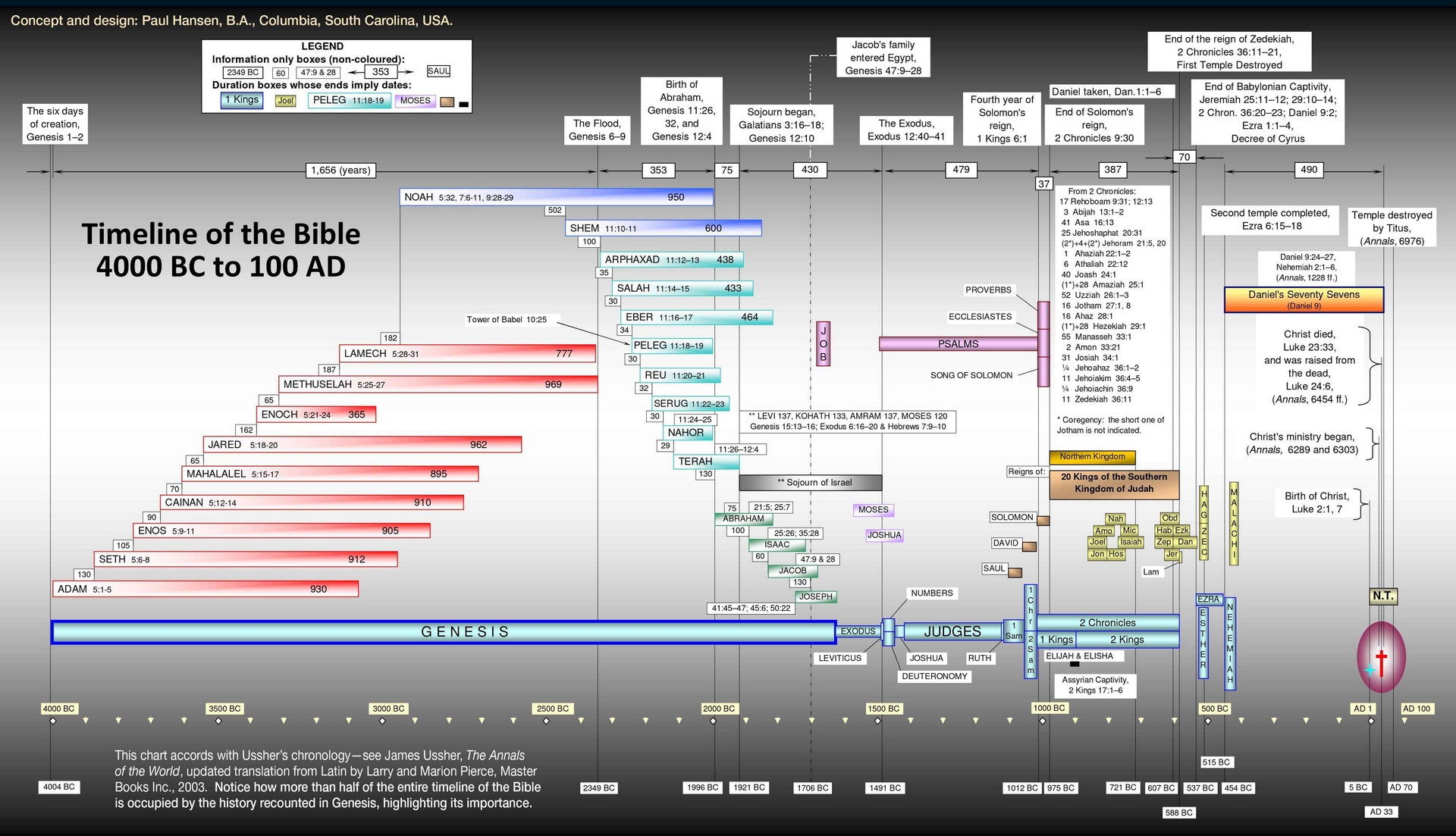
I know you can’t read the words, but they are names of people and events in the bible, along with lifespans and major events such as Noah’s flood (2348 BC). Everything on the image is from the Bible, which is not consistent with what Ussher and his contemporary chronologists did. They used data that wasn’t Biblical or even religious; I suspect that many of them would have embraced the progress of science through the centuries. So the fact that so many people now use their work to define the history of the Earth means that modern fundamentalists are not only denying scientific advancements over the centuries but they’re also misusing the science that people were doing 400 years ago. I find this astonishing.
Short-Earthers embrace the idea that the formation of the Earth and everything on it was done by God, a single and all-powerful divinity, in 6 days. This is the fundamental precept of creationism and is in direct conflict with what science has taught us about species evolution over hundreds of millions of years. The denial that science has anything to contribute to our lives beyond the Bible has direct implications for denial of climate change and the efficacy of vaccines.
One of the main arguments that creationists use against evolution is that the complexity of life couldn’t possibly be a product of random chance. Therefore it must have been created by a divine hand; one thing the creationist movement has done to try to make the message more palatable is to rename it Intelligent Design.
The main message coming from the movement is that science and faith are at odds with each other, as if we can only have one and not the other.
I don’t agree with this premise, and it’s what has motivated me to give this talk. I believe science and spirituality absolutely can co-exist. In fact I believe that studying geology has given me more opportunities to feel awe and wonder and spiritual inspiration than I would have otherwise. I think that the process of evolution- which may happen over days (viruses) up to millions of years (lasting changes in most animals) – is way, way more interesting than if a divine being had created it in a flick of the wrist.
One of the reasons I appreciate Unitarianism is that one of the principles is that we honour a “free and responsible search for truth and meaning.” And with respect to science this is hand in hand with one of our new values, “Transformation understands that we must adapt to the changing world.” Openness to change is fundamental to Unitarian and Universalist heritages, never complete and never perfect.
I’ll close with a quote from Carl Sagan, whose skill with science communication made him a rare scientist who had a popular following and successfully engaged non-scientists with the wonder for the natural world.
Science is not only compatible with spirituality; it is a profound source of spirituality. When we recognize our place in an immensity of light-years and in the passage of ages, when we grasp the intricacy, beauty, and subtlety of life, then that soaring feeling, that sense of elation and humility combined, is surely spiritual … The notion that science and spirituality are somehow mutually exclusive does a disservice to both.
Thank you.
Meditation / Conversation starter
- What is your experience of how science, religion and spirituality have intersected in your life?
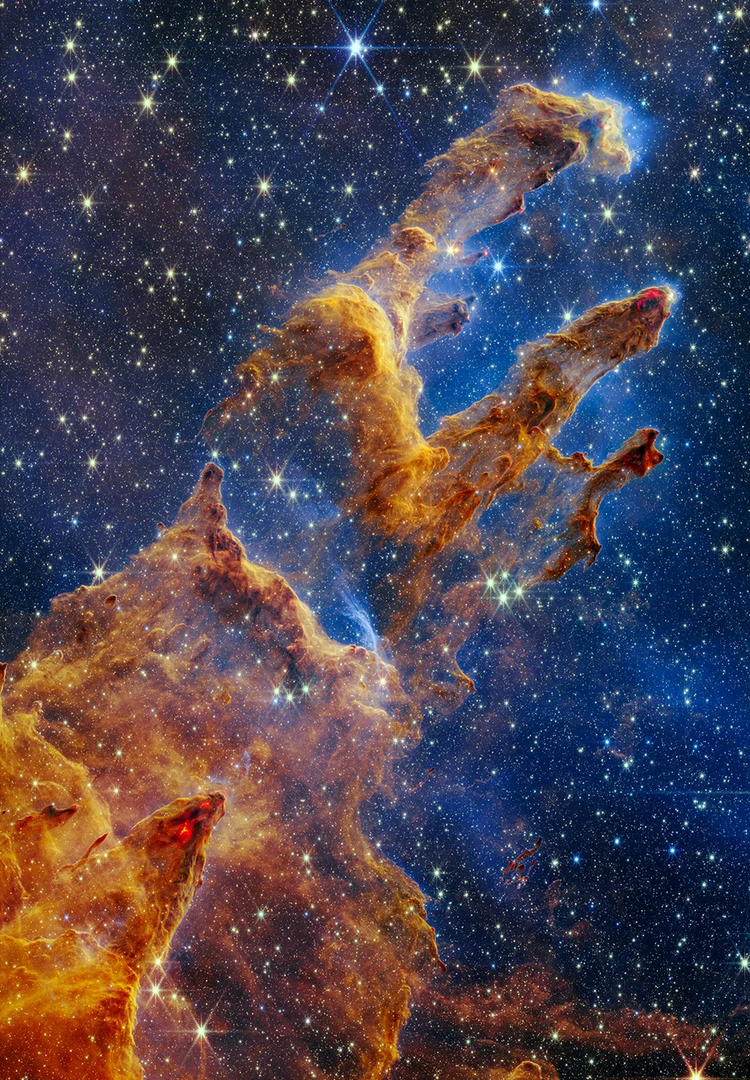
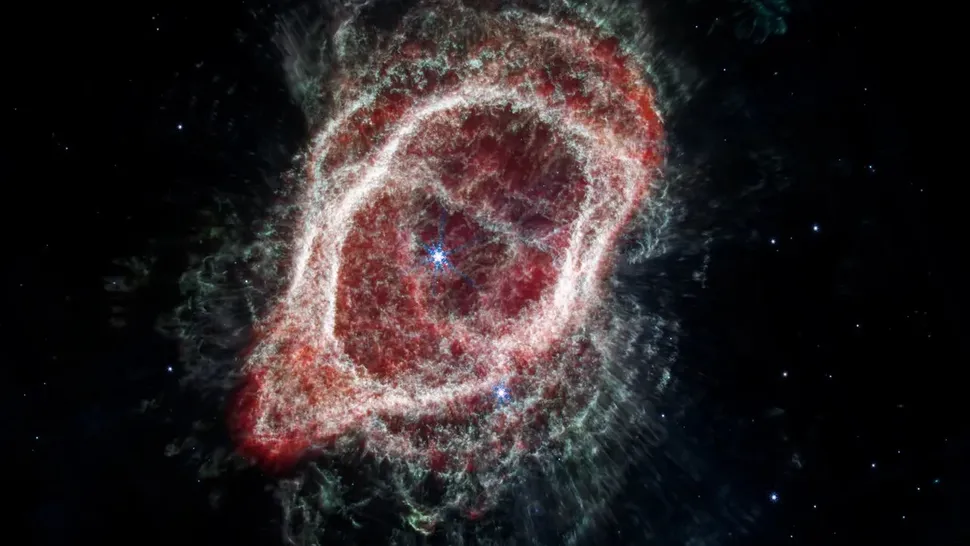
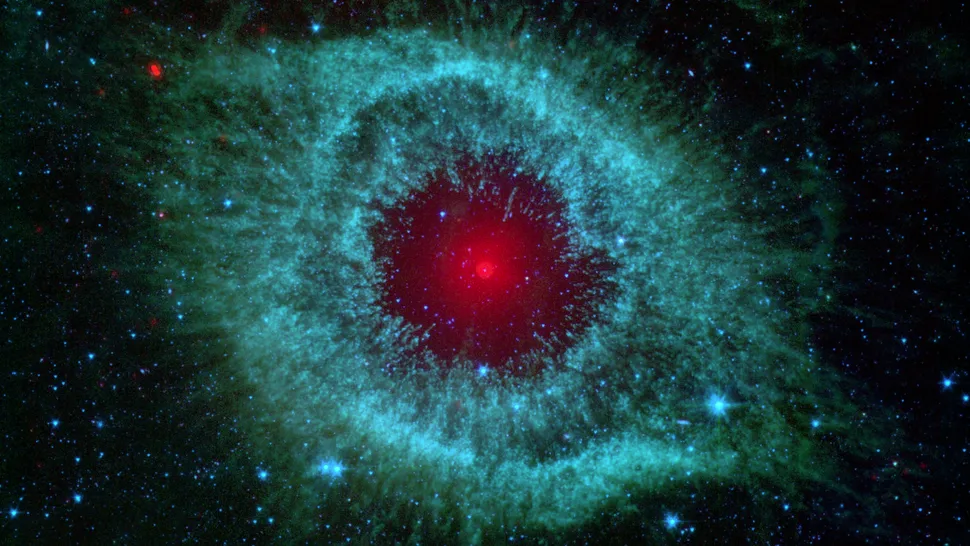
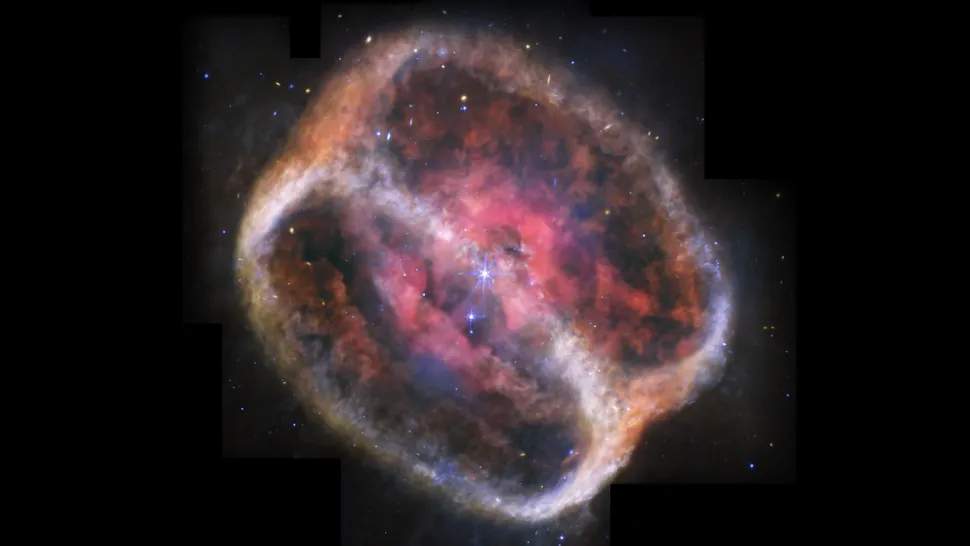
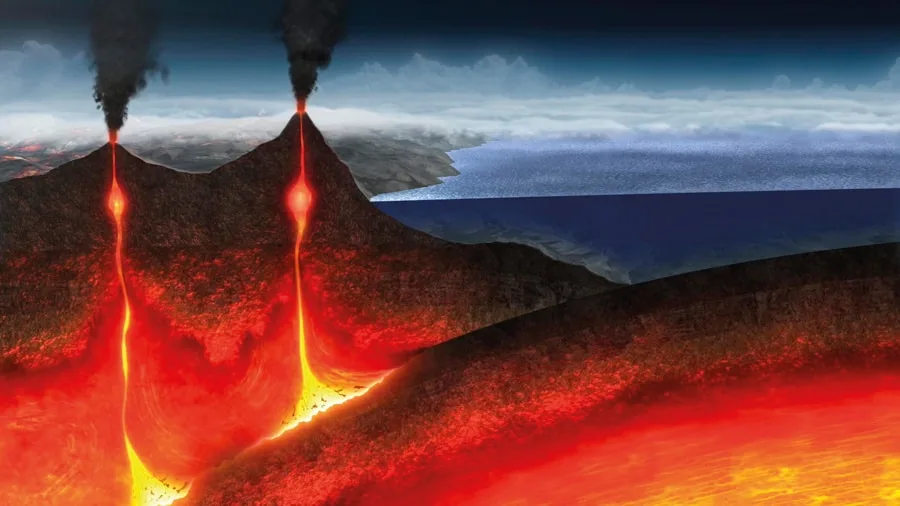
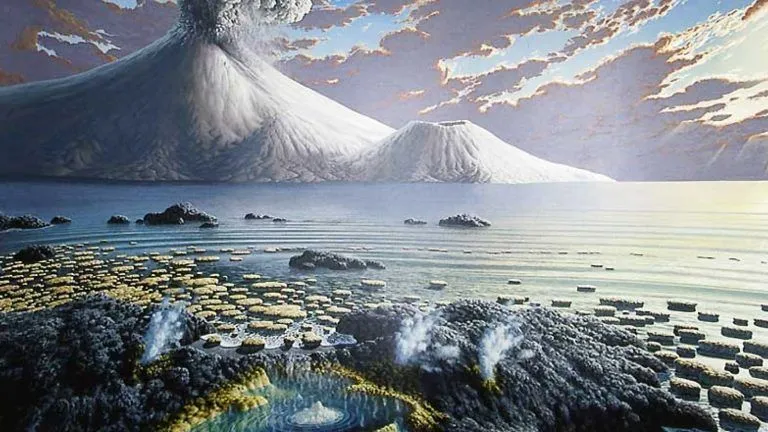
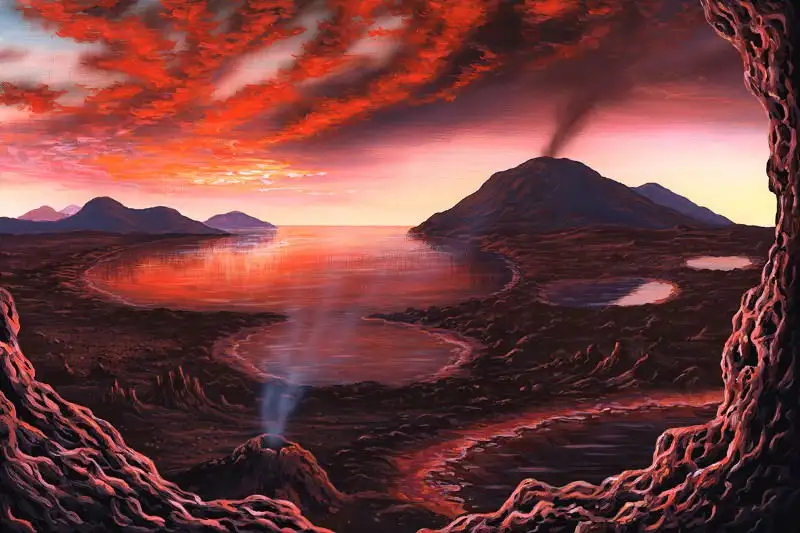
Images to meditate upon…












Links
Opening & Closing Words:- both from Goodenough, U. (2023). The sacred depths of nature: how life has emerged and evolved. Oxford University Press.
Reading:- “LIFE!” by Marcelo Gleiser