Speaker:-Barbara Thomborson
Worship Leader:- Karn Cleary
Read below, or download the PDF
Barbara Thomborson © 19 October 2025
This joyful service celebrates the life of our congregation and is our annual memorial to the life of its creator, Rev. Dr. Norbert Čapek. As minister to Unitarians in Prague, Czechoslovakia, he was a 20th century Unitarian martyr, killed by Nazis in 1942.
The British Unitarian Assn describes the Flower Communion as “a celebration of the good things of life as given and received through the fellowship of a congregation, symbolised in the giving and receiving of flowers.” The Flower Communion has become an Auckland Unitarian annual ritual to celebrate the coming of Spring, one of the best things in life, IMO. It also commemorates the minister who created the Flower Communion. You’ll hear more about Rev Čapek later.
Religious communion can have elements of ceremony and/or ritual. Communion means a union through deep communication with someone, or being in intimate rapport with something, like Nature. it combines the words common and union into communion. The Unitarian Flower Communion blends both senses of ceremony and ritual: as ceremony, it is a celebration of Spring and a commemoration of Rev. Norbert Čapek’s life. As ritual, the flowers symbolise Spring and the giving-and-receiving we do in the process of the service. In this Unitarian communion, through celebration and commemoration we can experience the personal communication with people at the service AND being in rapport with something spiritual or greater than ourselves. The Flower Communion intends to engender in participants a union with participants and a spiritual union with flowers present in the service.
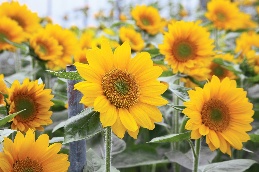
Why the picture of the sunflowers? Well, I promised you more about the Flower Communion’s creator, Rev. Norbert Čapek. The sunflower was the national flower of his home country, Czechoslovakia.
In 1921, on returning from the U.S., to Prague Czechoslovkia, he founded the Czech Unitarian Church and created this communion to replace the traditional Christian Communion Service. Many members of his congregation did not agree with the Christian Communion in which bread and wine symbolise Christ’s body and blood. Their strong reaction was either against the Catholic faith or against implied cannibalism. However, they still missed the ritual of communion. Čapek turned to the native beauty of the Czech countryside to inspire a new communion, which would be genuine to his congregation. His wife, Maja, toured the U.S. in 1940 and introduced the Flower Communion to Unitarian congregations. It caught on fast and has become a ritual, annual service in many Unitarian congregations throughout the world, including ours.
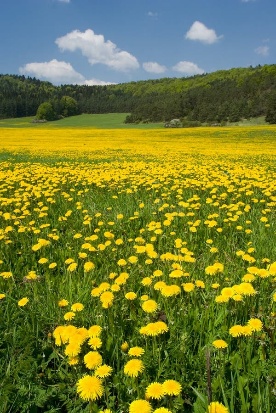
Changing the focus from Čapek to flowers, we can appreciate their many natural aspects. Often, they are hardy, sometimes hardier than we’d like – think of weeds, especially dandelions. Imagine trying to weed out all these unwanted beauties! Yet you can’t help but marvel at dandelions’ adaptability.
Flowers, even dandelions, are useful as food for animals, including us, and as medicine. Their fragrances can change our mood through wearing perfume or burning flower-scented incense or candles. They have an essential niche in sustaining life beyond their own through the pollination process. Our choices of vegetables and fruits would be sadly small without bees to gather pollen from flowers and spread it to other flowers. And GASP! We would not have honey without flowers!
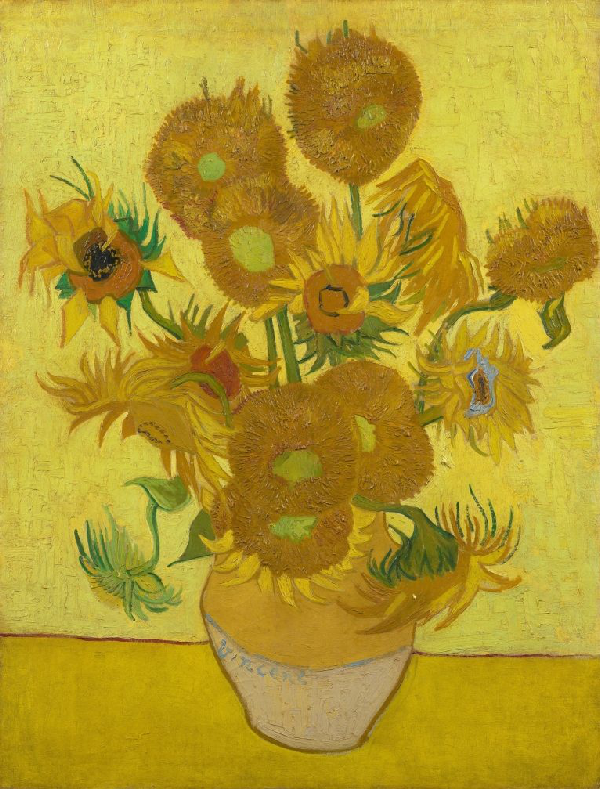
Beyond these practical uses of flowers, they give us beauty. Maybe that is another practical use of flowers, for they have inspired countless and magnificent works of art. One of Dutchman Vincent van Gogh’s most beloved works is Sunflowers.
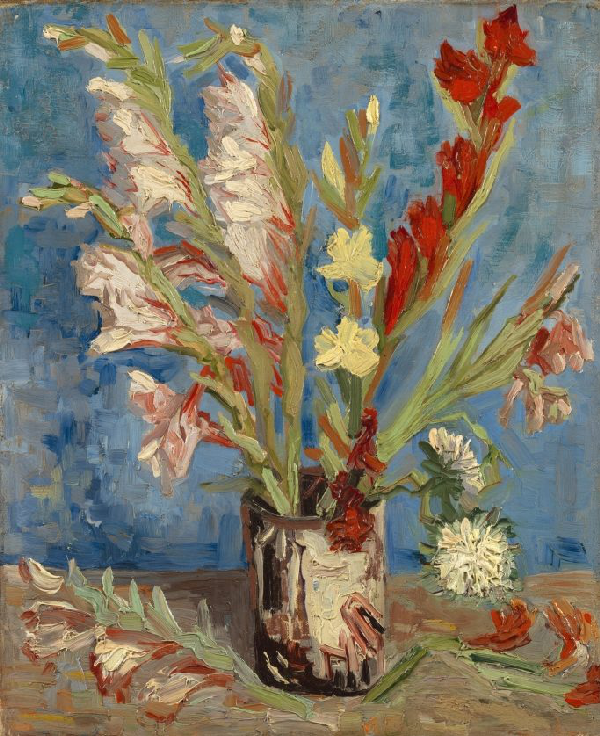
At the Vincent van Gogh Museum, 20 of his 32 paintings are of flowers. He especially liked painting trees of springtime blossoms and still-life vases of large flowers, such as this Vase of Gladioli and Chinese Asters.
A contemporary painter of van Gogh’s who also loved painting flowers was Frenchman Claude Monet. While van Gogh was a ‘modern’ painter (not to be confused with modernist painter), Monet was the foremost Impressionist painter. In his life, he painted 784 landscapes and 417 canvases of flowers for a total of 1,201 paintings inspired by nature.
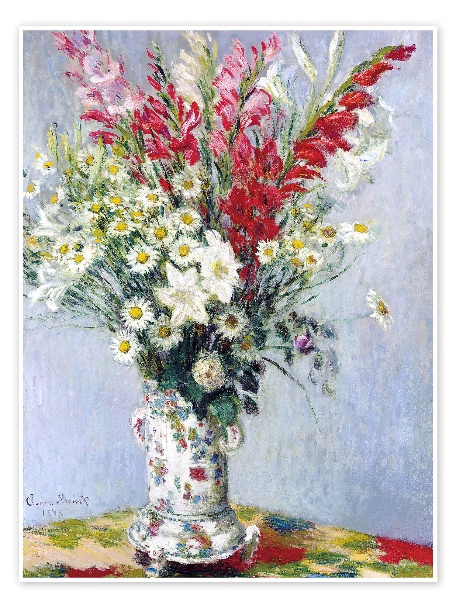
Compare their different styles of essentially the same subject:
Of Monet’s 417 canvases of flowers, 250 have water lilies or are about water lilies only. His most famous and beloved water lily paintings are 8 large, wide canvases of water lilies in 2 rooms of the Musée de l’Orangerie, Paris. Monet donated them to the French government to commemorate the signing of the Armistice that ended world war 1. He painted them after the Armistice with peace in mind, and they were installed after his death. The 8 paintings ended up in two large, oval-shaped rooms at the l’Orangerie museum of modern art. Follow this link to view all 8 compositions of The Water Lilies by Claude Monet.
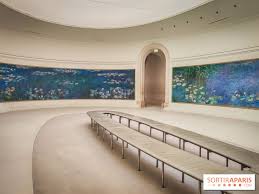
I had the privilege of experiencing the affect of these paintings in person. After 20 minutes in each room, I walked out with profound peace from taking in the blue, violets, and greens of these spiritual works of art. The first words my husband said, when we could find words again, were, “I had no idea!” Such is the power of art.
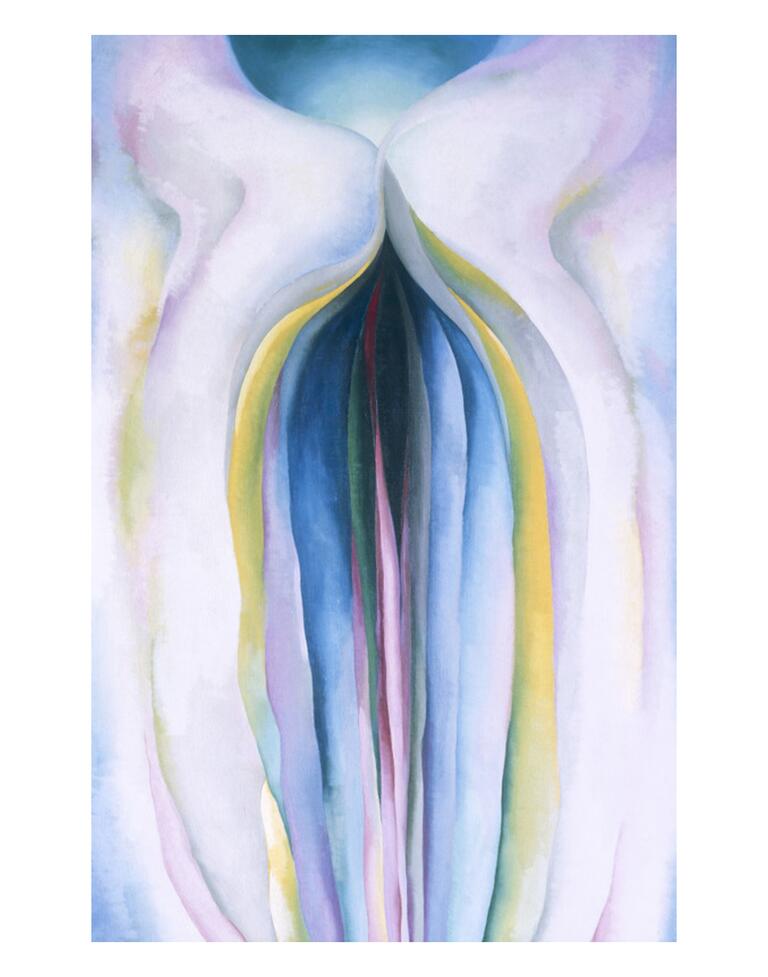
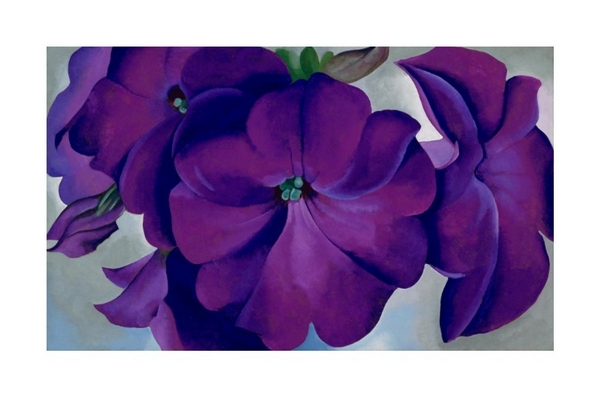
I’ve chosen one more artist whose paintings of flowers are, in the opinion of many like me, great works of art. Like van Gogh, American Georgia O’Keefe was one of the most influential figures in Modernist art. However, when in her 60’s, she returned to her artistic roots as an Abstract painter. She was a major influence on Abstract art, even photography. From her first works, she interpreted flowers in an imaginative, abstract way. Abstract artists wanted to release design from the limitations of representative art that duplicated subjects realistically, with no personal interpretation or imagination. In popular culture, O’Keefe is best known for her large-format paintings of natural subjects, especially flowers, bones, and landscapes.
She exalted in abstract interpretations of vulva into highly imaginative and colourful, close-up perspectives on a variety of flowers. Here’s one example from her early abstract art:
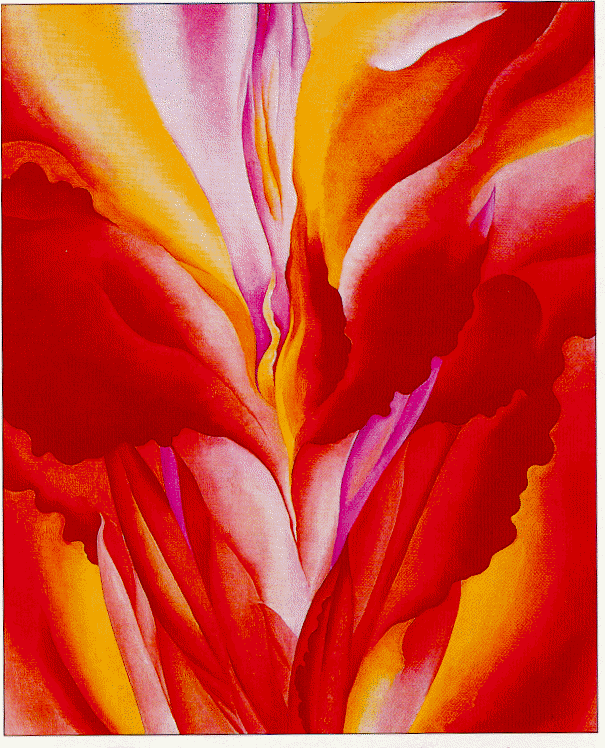
Among her most popular flower paintings are Red Canna and Petunias
So ends this foray into a taste of the modern history of flower paintings and painters.
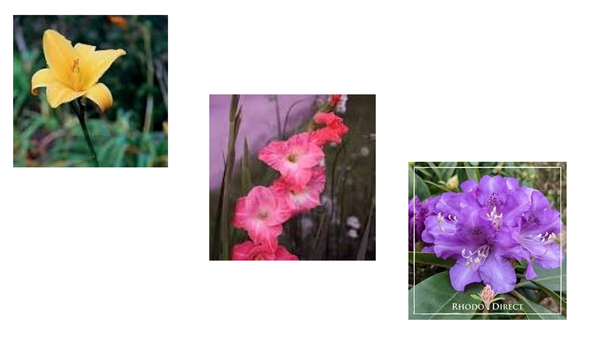
From this contemplation of the beauty of flowers, let’s go into a quiet activity, and to prepare you for it, consider these real flowers. Observe these flowers in their variety, colours, shapes, meanings to you.

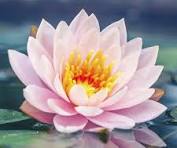
This last slide, of a lotus, is to prepare you for a Buddhist flower meditation.
Meditation
This meditation starts with 1 minute of relaxing breathing and proceeds to 2 minutes mindful concentration of your flower. If you can’t get a flower pick one of the images above. You might want to set yourself a timer so at the end of the time for meditating, it’s time to start bringing yourself back to the room.
Place your flower gently in your lap. sit comfortably, feet flat on the floor and pointing forward. If you feel tension anywhere in your body, stretch or rub the tension away. Breathe in. Breathe out. You’ll hear the sound of ocean waves as you breathe.
After 1 minute of meditative breathing, we’ll go into the mindfulness meditation. Close your eyes if you wish.
Now open your eyes, hold your flower so you can see all of it, and focus on it. What is the first impression the flower gives you? What strikes you as special about this flower? Try not to analyze or overthink – just go with how the flower makes you feel when you look at it.
Open your eyes and concentrate on this flower – maybe its beauty moves you; maybe its colour is intriguing, maybe its shape; just concentrate on that one thing as long as you can. If your thoughts wander, gently bring them back to the flower. If outside noise distracts you, just note that it’s noise and bring your thoughts back to the flower. When you hear Frank play a song, it’s time to start coming back to the room.
May you be like your flower: trust in the light, grow through the dirt, believe in new beginnings.
Links
Opening Words:- “Come, let us worship together” by Lindsay Bates
Chalice Lighting:- is from the Hungarian Unitarian Church
Reading:- “Infinite Spirit of Life, we ask thy blessing on these” by Norbert Fabian Capek
Closing Words:- are by Scotty Meek