Jazz is Life — What Music MeansJazz is Life — What Music Means – Full Episode Listen, or download the MP3Jazz is Life — What Music Means – Talk Only Listen, or download the MP3
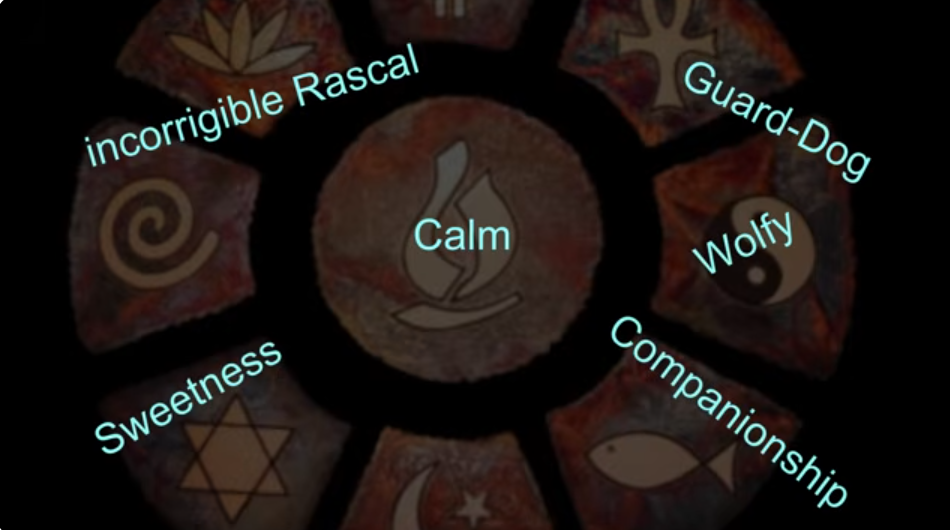
Blessing of the AnimalsBlessing of the Animals – Full Episode Listen, or download the MP3Here are the words people chose to describe their animalBlessing of the Animals – Talk Only Listen, or download the MP3
Religions have strange, implausible stories, that assume there is a secret depth that sometimes seeps – or bursts – into ordinary life. While I have never ‘believed’ in an enchanted world, people thrive when they see beauty and meaning in what surrounds them. And that’s a creative process that requires unknowns and surprises. This talk explores the role of enchantment in contemporary life.
The Enchanted World, with Niki HarréThe Enchanted World, with Niki Harré – Full Episode Listen, or download the MP3The Enchanted World, with Niki Harré – Talk Only Listen, or download the MP3
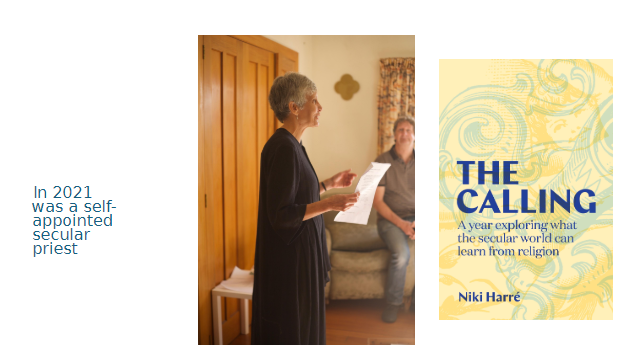
I am a community psychologist, and an atheist and in 2021 I undertook what could be called action research in which for a year I a) investigated Christianity and a) was a secular priest.
Service Leaders & speakers: Barbara Thomborson, Karn Cleary
Today we’ll celebrate the Spring. The Equinox happens on September 23rd. marking a moment of balance before we transition into summer with longer daylight hours. This is an opportunity to consider what we want to leave behind in the darkness of winter, and how we will grow our hopes for the coming summer.
Spring Equinox CelebrationSpring Equinox Celebration – Full Episode Listen, or download the MP3Spring Equinox Celebration – Talk Only LIsten, or download the MP3
How the Equinox is measured when the Earth is in Balance – Karn
This is going to be a very short talk, as I expect all of us know what the Equinox generally refers to, the day when we experience equal hours of daylight and dark.
Today’s service honours Te Wiki ō Te Reo Māori and it is guided by our values of inclusion, justice and, if any of you are changed at all by the service, then also transformation! The value of inclusion is for that of the first people of this land, and the justice value is regarding the human right to speak one’s own language.
Introductory words
This week is Te Wiki ō Te Reo Māori and as an introduction to today’s service dedicated to this theme, I want to share with you the story of Karangahape Rd, or K’Rd, as it is commonly known.
Music matters spiritually because it can interrupt us, open us, and connect us—to our own inner lives, to other people, and to something larger than ourselves.
When Music Takes Our Breath Away: The Sounds of ReverenceWhen Music Takes Our Breath Away: The Sounds of Reverence – Full EpisodeWhen Music Takes Our Breath Away: The Sounds of Reverence – Talk Only
Each Sunday including this one we take the opportunity to share our joys and concerns. For me, this talk is an extended joy. I’m no expert on music. I am not here to lecture you on the technicalities of music because I don’t really understand them myself. Instead I want to share the joys that music brings to me and try to explain why that is, and the role that it plays in my spiritual life. My hope is that some of it will resonate with you and that it provides an opportunity for you to reflect on music in your life and share some of the joy I feel.
After a month of daily cold-water swimming and meditation, Kate will reflect on the physical, emotional, and spiritual effects of these disciplines. Understanding the science behind the practices does not reduce them to dry and rational explanations but adds to our experience of awe and wonder.
A vibrant, Auckland-based a cappella choir with a gospel heart and a rock ‘n’ roll soul (so says their website). Founded in 2000, this 30+ strong ensemble brings together people from all walks of life—It was founded 26 years ago by Jean McAllister and the late NZ blues legend Rick Bryant and a number of others who are still in the choir. They love their rehearsal space – our Unitarian Church – where they rehearse weekly. A very warm welcome to Jubilation Acapella Gospel choir.
Meditation / Conversation starter
What is the first song you remember singing as a child?
Were you ever in a choir?
How did it make you feel when you all sang together?
Exploring music as a development of pulse, breath and vocalisation, and also as a way of building culture through repetition, borrowing and repurposing.
Music and Being Human / the beat and the borrowings / the song we becomeMusic and Being Human / the beat and the borrowings / the song we become Listen, or download the MP3 – Full EpisodeMusic and Being Human / the beat and the borrowings / the song we become Listen, or download the MP3 – Talk Only
I invite you to begin with something so ordinary that we rarely notice it.
Take a breath.
Feel your heart.
Before we learn language, before we develop beliefs, before we choose identities or communities, we live inside rhythm. The pulse in the womb and the rise and fall of our lungs are among the first music we ever know.
Speaker & Worship Leader:- The Revd Dr Ralph Catts
Ralph Catts is a Unitarian minister based in Melbourne, and it will be a privilege to have him lead one of our services, as he is the only Unitarian Minister in the South Pacific. He is the Learning & Development Coordinator for the Australia and New Zealand Unitarian Universalist Association (ANZUUA).
Seeking Meaning: A Theology for SeekersSeeking Meaning: A Theology for Seekers – Full Episode Listen, or download the MP3Seeking Meaning: A Theology for Seekers – Talk Only Listen, or download the MP3
Our fourth principle is a free and responsible search for truth and meaning. This approach contrasts with most of the major world religions where canon and a scripture from thousands of years ago proscribe what followers are to believe.
Hans le Grand, a European minister who is a friend of mine, has recently completed a Doctorate in Theology, in which he develops a Seeker Theology. His starting point is an agnostic approach to the mystery of existence and our place within the complexity of existence which, he suggests, is beyond our full comprehension (Le Grand, 2023, p. 46), The elements of a Seeker theology include
human thought as the source of ethics,
diverse sources of inspiration,
spiritual growth,
a world view,
the role of community and
a perspective on what happens after death (Le Grand, 2023, pp. 36 -37).
In all these dimensions he argues that rational analysis and personal discernment are the arbiters of reality. This distinguishes Seeker Theology from the canon of Christian theology.