Speaker & Worship Leader:-
Barbara Thomborson
Read below, or download the PDF – to come
Barbara Thomborson © 12 October 2025
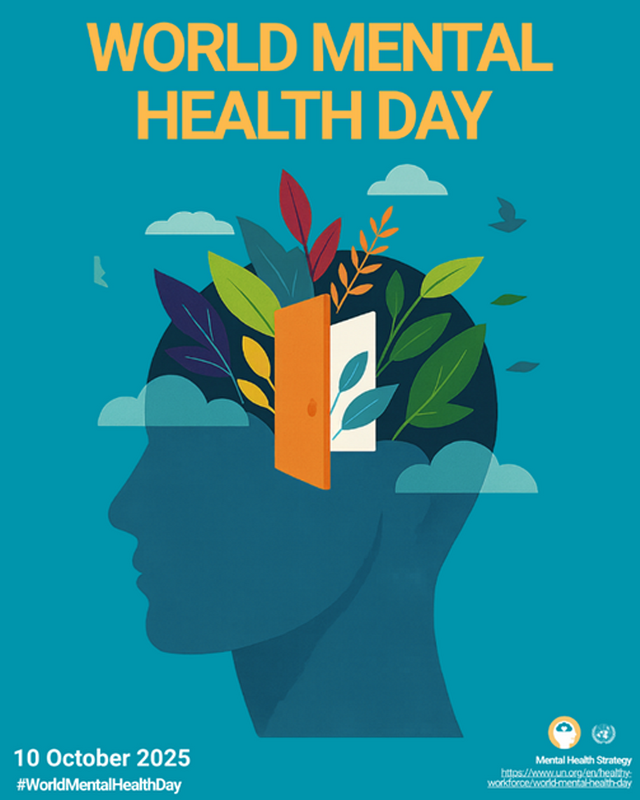
This year, Mental Health Awareness Week (MHAW) has been aligned with the UN World Mental Health Day, which was last Friday, 10 Oct. The week of events ended last Friday, but community events are still going on.
As someone who has a mental disorder and used mental health services, I was an advisor to Auckland DHB mental health services. So I reckon I’m qualified to speak on mental health awareness.
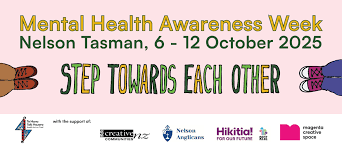
New Zealand’s nationwide wellbeing theme for Mental Health Awareness Week 2025 is Top Up Together. It encourages us to connect with others as we bring the Five Ways to Wellbeing into our daily lives.
This year, New Zealand Mental Health Awareness focuses on the collective or community aspect of the Top Up campaign. Recent research shows that a shared, community-based approach to wellbeing delivers the most sustained, long-term benefits for everyone.
Have you ever considered how social connection and community are crucial for our wellbeing? Humans are social creatures, meaning our brains are wired to seek connection and community with others. These connections allow us to share interests and feel a sense of belonging. We thrive when we have strong connections with others and supportive communities around us. We also know that people who are more socially connected to family, friends, or their community are happier, physically healthier, and live longer; they have fewer mental health problems than people who are less well connected. Activities involving social interaction do matter — activities like volunteering, shared learning, physical activity, cultural practices, and community events have a positive impact on mental health and wellbeing.
Two goals for New Zealand MH awareness week are, one: nurturing neurodiversity in the workplace and two: overcoming mental health stigma – a campaign called” Off! – we switch on support”.
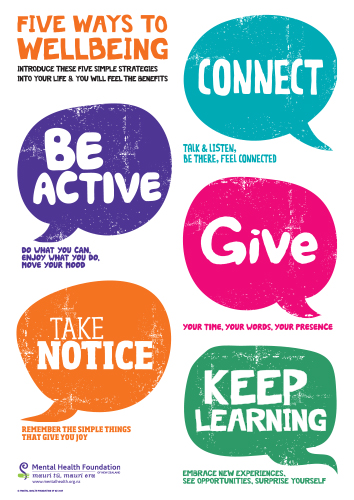
The New Zealand Mental Health Foundation promotes looking after your oranga or ‘living well’ by topping up together with the Five Ways to Wellbeing this Mental Health Awareness Week. This uses the pakeha approach to mental health; later we’ll look at the Maori approach when next we consider perspectives of mental illness from other cultures.
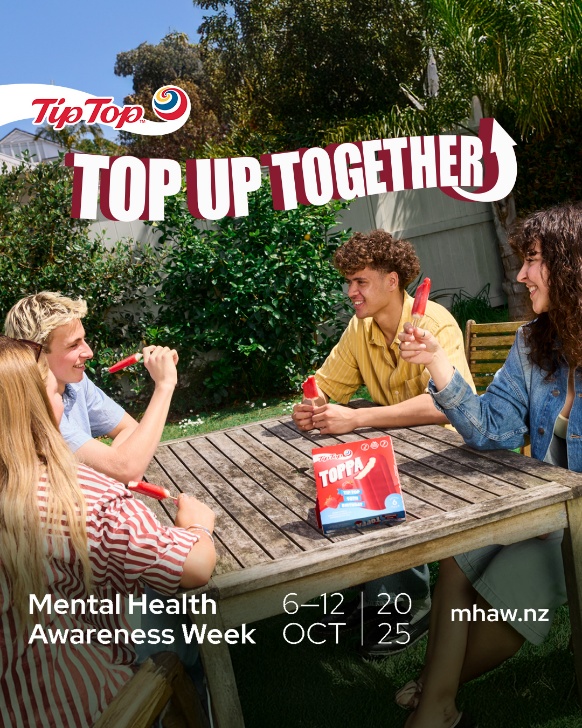
Apologies for advertising Tip Top ice cream, but I like the picture.
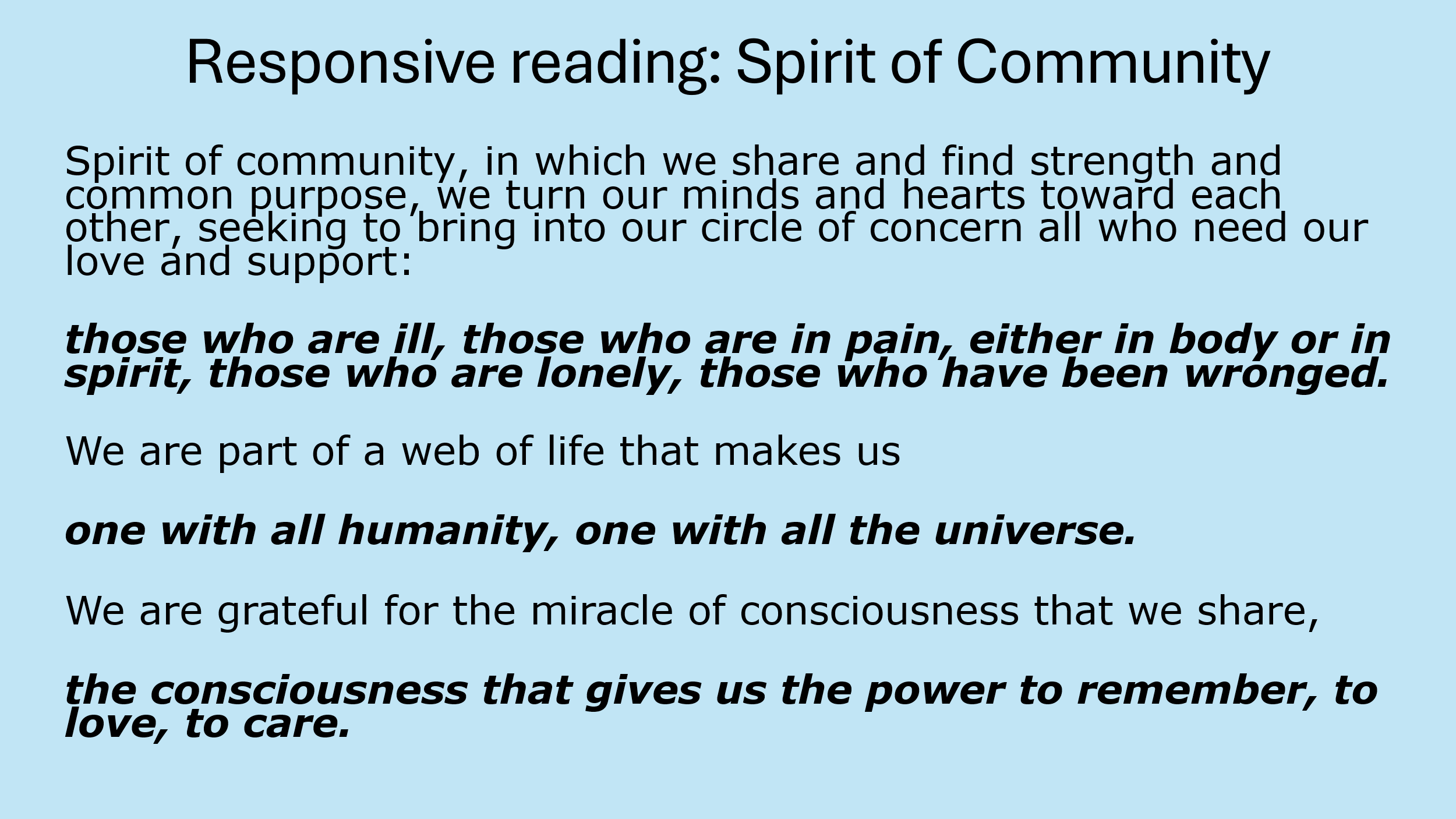
Before going on to cultural perspectives on mental health and illness, let’s do a Responsive Reading, Spirit of Community.
Your mental health and others
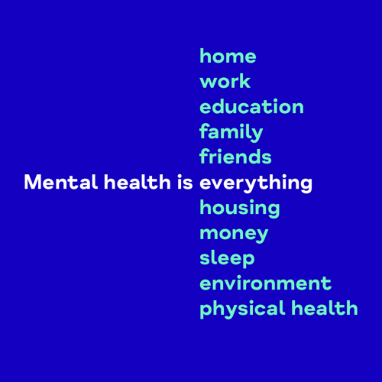
Returning to New Zealand Mental Health Awareness Week, let’s focus on personal mental health towards improving community mental health.
This is important because the chain is only as strong as the weakest link. This means that a group, organization, or community is only as strong as the weakest or least powerful person. As well, if the strength of each ‘link’ or person improves, the community’s mental health becomes stronger, too. So it all begins with YOU and your own mental health.
To assess your own mental health, firstly you must actually slow down to ask yourself some honest questions; then give yourself time to honestly answer them. The handout on your seat has 20 questions to assess your own mental health. It’s yours to take away and answer.
SLIDE 6
Let’s Look again at the mental health awareness week poster of 5 Ways to Wellbeing. Connecting with others is key to good mental health. The poster says we should talk and listen, be present to those we want to connect with. The second way is to be active. This can mean literally moving around, getting off the couch or your chair. Enjoy yourself and do what you can to improve your mood. I find using the acronym for G O D reminds me to Go Out Doors. I especially like the third one in pink: give your time, your words, your presence. The fourth way is related to the second one because it focuses on joy, doing simple things that give you joy. Lastly, there’s keep learning – embrace new experiences and welcome chances for doing new things. You may have to step out of your comfort zone for such newness, but you might find yourself pleasantly surprised. Noam Shpancer said it well: ”Mental health…is not a destination, but a process. It’s about how you drive, not where you’re going.”
Before looking at how to help those in mental distress, the following mental exercise should enable you to see that anyone can develop a mental health disorder from natural, normal behaviours. I hope it enables you to identify with anyone experiencing mental distress.
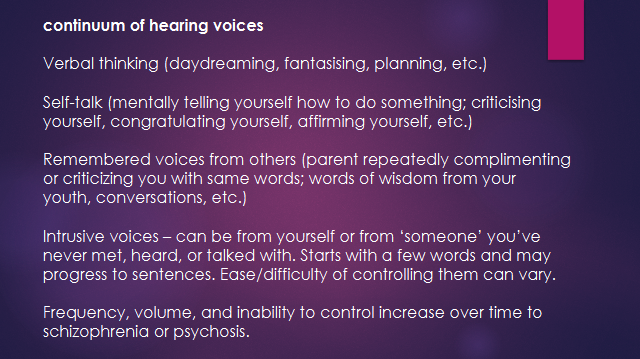
This continuum shows the progression of how anyone could develop auditory hallucinations, the psychological term also called hearing voices. Let’s start with basic verbal thinking – for example, daydreaming, fantasising, planning. We all do that, right? We all silently talk to ourselves, too. When criticising yourself, either silently or aloud, gets out of hand, it can be a sign of shaky mental health. As well, we all experience remembered voices. Again, if remembered voices criticising you keep repeating in your mind, this can be a sign of shaky mental health. All of us have also experienced intrusive voices that seem to come from nowhere, out of the blue. For me, they are often intuitive messages with advice on handling conflicts or for managing emotional distress. Some people have considered these intrusive voices as the voice of God or some other greater power. They often occur during or after prayer. If intrusive voices start to disturb you or advise you to harm yourself or others and you have trouble controlling them, you’re having auditory hallucinations. If the frequency, volume, and inability to control them increase over time, they can lead to psychosis. The intrusive voices make you out of touch with reality. I hope this has helped you understand and relate better to people with a diagnosis of mental illness.
Two goals for New Zealand MH awareness week are, one: nurturing neurodiversity in the workplace and two: overcoming mental health stigma – a campaign called” Off! – we switch on support”.
It’s important to appreciate that mental health diagnoses can stem from neurodivergent brains. This means that some with specific mental health disorders were born with a predisposition to the disorder. The mental health organisation Ako Aotearoa recognises innate, or in-born, neurodivergence, and acquired neurodivergent conditions. Acquired neurodivergence does not need physical evidence to diagnose someone’s condition as neurodivergent. Attention deficit disorder and autism are examples of medically recognised neurodivergent conditions. While the medical community does not recognise acquired neurodivergence, it does recognize some mental health disorders as neurodivergent. I happen to have one of them. My brain does not look like most people’s brain – it is different.
Helping others with mental distress
The second goal of this year’s mental health week is reducing stigma. Stigma is a mark of disgrace we associate with a particular group of people. We often feel fear towards those we stigmatise. The stigma towards people suffering from mental distress hurts them and can obstruct those good-hearted people who would like to help them. My scariest time of working with people in Auckland hospital’s intensive care mental health unit involved a man with auditory hallucinations. He was a very large man and built like a bodyguard. I was not especially buff and have always been short, yet I walked up to him with the attitude I showed everyone there. I approached everyone with love and caring in my heart and body. Well, our conversation ended when the large man paused and said, “my voices are telling me to knock your head off”, and he walked to his room. That was only one of hundreds of such patients I interacted with. I use this example to illustrate the need to overcome fear of those with mental distress or disorders before approaching them. Love is the opposite of fear, so take time to foster love for the mentally distressed before you try to help them. In this talk, I keep referring to my mental health disorder in the hope of reducing your stigma to mental illness. I have 2 Masters degrees, 3 Bachelors, was president of my American university student congress and received the highest award for service to the student body. I taught at Massey university and received the highest student evaluations ever for the paper. All of this with a mental ‘illness’ and not on medication.
One awareness of those experiencing mental distress I want to impress on you is their loneliness. Loneliness is one of the most common and hardest parts of experiencing mental distress and disorders. For much of my life, living with my mental health disorder has meant horrible episodes of soul-crushing loneliness. I’ve heard people describe it as the dementors in Harry Potter sucking your life force away and reducing you to an empty shell. Please remember this deep, horrendous suffering when you consider connecting with someone in mental distress. It will mean so much to them, even if they cannot express it at the time. Your attitude of love and caring will include your desire to assuage their loneliness.
It’s time to wrap up this plethora of information on mental health awareness. In remembering mental health awareness week this year, think of the emphasis on community and connecting with others. You strengthen your own mental health and that of the community by connecting with others. Please take the 20 questions handout and honestly answer the questions. And keep in mind the five ways to wellbeing. Remember that most mental health disorders are overdeveloped natural behaviours that you can now understand better. Please consider your own stigma towards mental disorders. If you want to help someone in mental distress, take time to overcome any fear from stigma and foster love towards them. And never underestimate the gratitude of those with mental distress when you reach out and connect with them.
I end with a quote from journalist and author Germany Kent: “Be dedicated to change the way in which people see mental illness at all levels of society. If not for yourself, advocate for those who are struggling in silence.”
Links
Opening Words:- “Come into this circle of community. Come into this sacred space” by Andrew Pakula
Chalice Lighting:- “First Principle Chalice Lighting” by Florence Caplow
Closing Words:- “Mindful of our highest aspirations” by Rebecca A Edmiston-Lange