Speaker:- Dr. Tof Eklund
Worship Leader:- Rachel Mackintosh
If you find nonbinary gender(s) confusing, want to understand what it means to be nonbinary, or are nonbinary, this one’s for you. Dr. Tof Eklund (they/them) speaks about being nonbinary, the challenges and prejudices nonbinary folks face, and the profound implications of nonbinary thought and spirituality.
Dr. Tof Eklund, (they/them), is Lecturer in English and New Media Studies @ AUT.
Read below, or download the PDF
A Reflection on Rainbow Flags
Maria Hayward © 15 February 2026
Kia ora koutou katoa. I am going to read a personal reflection on this month’s Pride theme, and then I’ll introduce our guest speaker, Dr Tof Eklund.
I thought I’d talk about flags.
I had intended to open the Pride month services with brief explanation of the rainbow flags we’ve been displaying, but I didn’t manage to get around to it. Then, with the occasion of Tof speaking today, I wondered if there was a non-binary flag – and there is, so I’ll talk about that soon, but this gives me an opportunity to also talk about the rainbow flag in general.
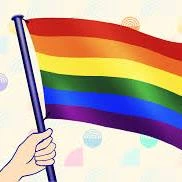
The original pride flag was designed by a San Franciscan gay, political activist named Gilbert Baker and introduced in 1978. It is all about diversity, hope, unity, and pride within the ‘rainbow’ community.
The colours in the six horizontal stripes represent the following:
Red (life), Orange (healing), Yellow (sunlight), Green (nature), Blue (serenity /harmony),and Violet (spirit).
The rainbow flag has gone through a range of iterations since 1978 and there is now a modernised version which includes a chevron with black and brown stripes that represent the queer and trans identities of black and brown people.
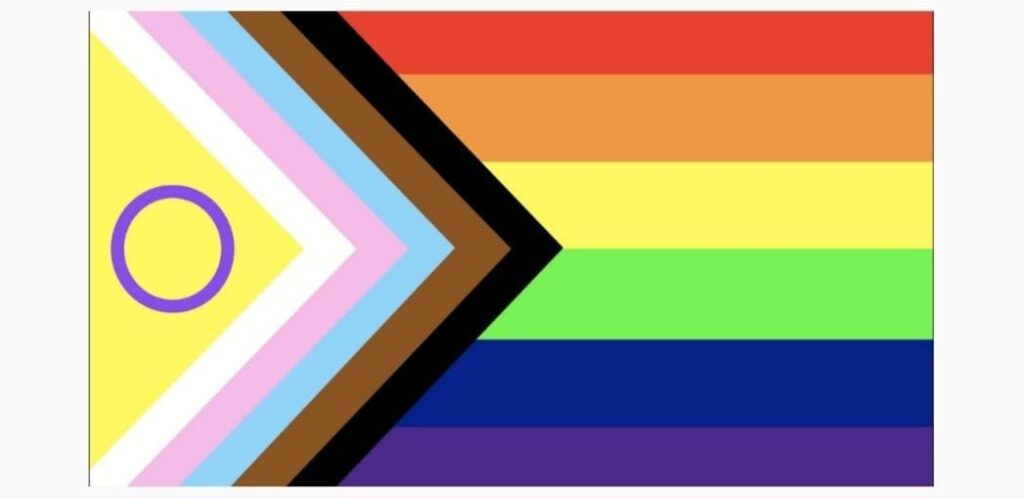
The pale blue, pink and white stripes in the chevron are the colours of the transgender flag. The flag was further revised in 2021 by the Intersex Equality Rights group in the UK to incorporate the yellow triangle with a purple circle in the middle, which of course, is for intersex people.
Did you know that there is a heterosexual flag? It’s black and white stripes. Isn’t that cool! Black and white – no grey, no colours – clear and simple, binary, one thing or the other. Heterosexual males and females. So boring!! Much more interesting to have all the colours and some geometric patterns!!
And there are also the following additional flags: Genderflux, Graysexual, Bigender, Maverique, Dragfeather, Pansexual, Bisexual, Asexual, and Abrosexual. We might talk about them another time.
Everyone has a place – and as Keola said last week – everyone is beautiful.

And because it’s today – let’s now look at the non-binary flag! These colours are actually in the rainbow flag, but the individual flag is the one you see in the slide.
This flag represents people whose gender identity does not fit within the traditional male/female binary. Each of the colours symbolizes a different subgroup of people who identify as non-binary.
In summary:
- Yellow: Represents genders outside of the binary.
- White: Represents people with many or all genders (white light, as you may remember from Keola’s talk last week, includes all the colours in the visible spectrum).
- Purple: Represents a mix or combination of male and female genders.
- Black: Represents agender people, or those with no gender.
About 1-2% of a population might identify as non-binary. Many in this group see themselves as a mixture of both genders, some are transgender as well, and some just don’t want to be labelled as one or the other gender.
In this sacred place, this whare tapu, we’ve heard about or been addressed by a wide range of individuals or representatives of groups. Every single person, opens our eyes a little more, makes us feel a little more, broadens us spiritually and with all of this, we are truly enriched. Our boring flags become so much more colourful.
Introduction to Dr. Tof Eklund
I want to introduce Dr. Tof Eklund, our speaker for today. When Tof first joined our School at AUT, I thought they might have been Scandinavian because of the sound of their name. But what was interesting about Tof was that we all received a personal, introductory email from them. Tof explained that they were non-binary and used the pronouns they/them. I have to confess to my own limited, binary, black and white thinking back then. I wondered how I could use they/them for a singular person.
But of course you can: firstly the grammar is actually fine: we have no problems using the pronoun you (with a plural verb) to refer to just one person or to many people. In English, ‘You’ is both singular as well as plural pronoun and we just work out from the context whether one or more than one person is being referred to. E.g: If I said, “Are you going for a coffee after the service?”, either I’d make it clear, or you’d be able to work out if I was talking to just one person or the whole congregation. And then secondly: we do actually use ‘they’ with a plural verb when we don’t know or don’t wish to reveal the gender of a person: “There’s someone waiting for you in the waiting room. They had an appointment at 10am”.
I now purposely use ‘they’ as often as I can, as this normalises its use and is a much more inclusive form than the binary he/she.
But back to Tof: Tof is a lecturer in English and New Media Studies at AUT, but today they’re going to talk to us about something a little more personal. I happen to know they are a very popular lecturer – so, I‘m really pleased Tof’s agreed to talk to us today for Pride month, and I love the title of your talk – “Non-binary, non-dualist, nonreductive” and which I’ll now hand over for you to elaborate on for us.