Store up Your Treasures in Heaven

Share this page...

With John DiLeo

Store up Your Treasures in Heaven
Listen or Download

John DiLeo © 28 July 2019

Before I begin my talk, I want to give you a brief rundown of my history, with regard to religion and church.

Although my parents were both active in their respective churches as children and teens, they remained largely unchurched after they married, and never did much to encourage my siblings or me in that regard. I would occasionally go to church with various relatives, but really didn’t have any sort of a religious upbringing.

Continue reading Store up Your Treasures in Heaven
Living with contradictions

Share this page...

with Rev. Clay Nelson

Living with contradictions
Listen or Download

Read below, or download the PDF

Clay Nelson © 21 July 2019

I confess to being cursed. In case you haven’t noticed, I’m definitely not swimming in the mainstream. It may explain why I’ve ended up a Unitarian, where atheists go to church. Contradictions, which lead me to paradoxes, mesmerise me. What could be more exciting than when two opposing, irreconcilable truths seek to occupy the same space? What could possibly go wrong when an unstoppable force meets an immoveable object? While sometimes a clear right or wrong answer to life’s immutable questions would be comforting, they smell to me like a bottle of snake oil to cure all my ills that has passed its use by date. The rising hair on the back of my neck warns me that life is just not that simple.

Continue reading Living with contradictions

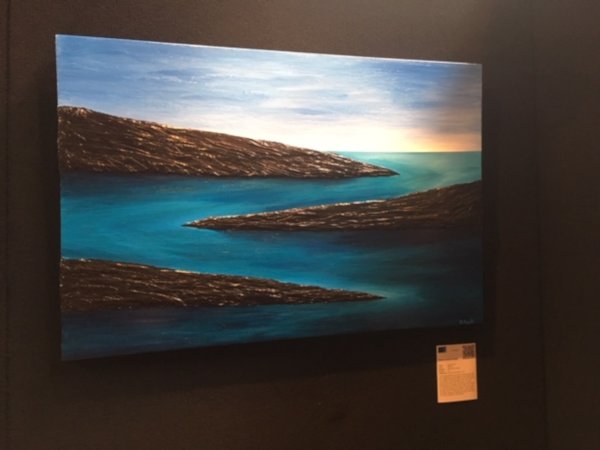
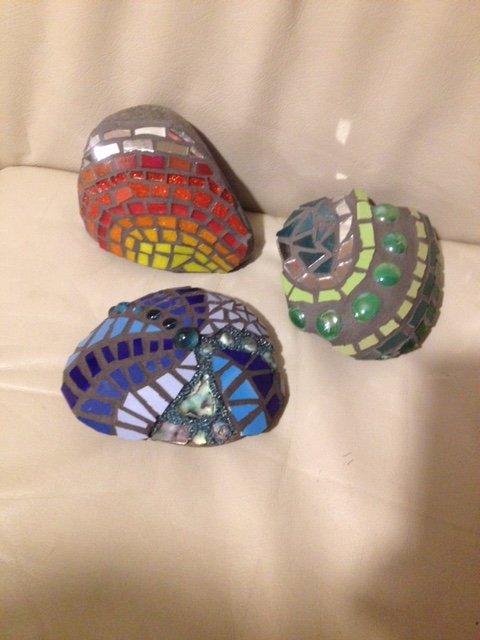
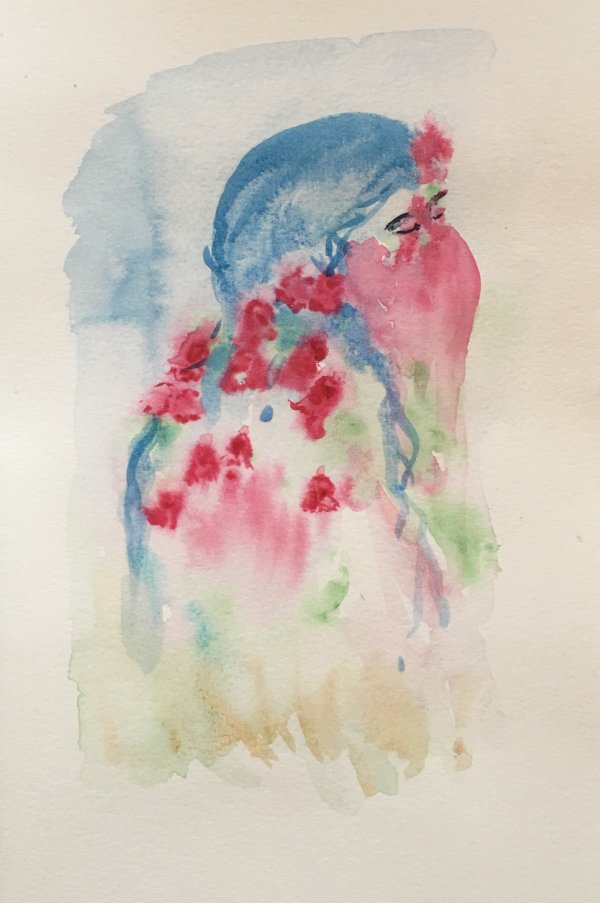
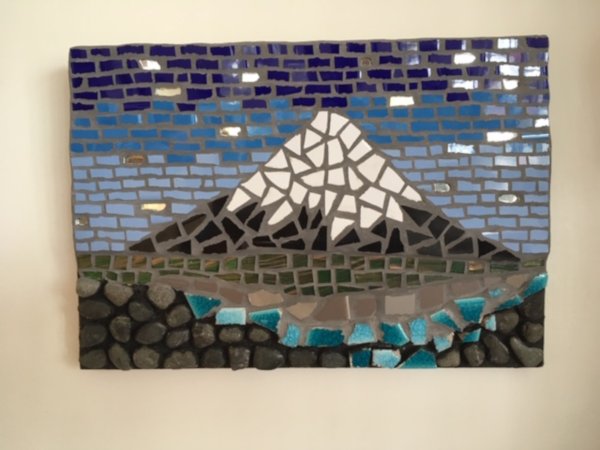
Art on a spiritual theme…

Share this page...

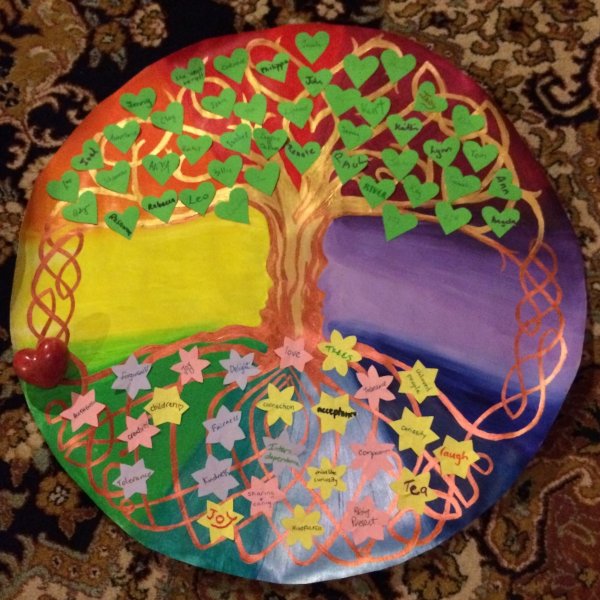
Interactive Station: The Tree of Life or the Tree of Enlightenment.

Finished mandala with exhibition visitor’s names on leaves and attributes of a nurturing community on the flowers.

The Tree of Life appears in almost every faith, but it could be the Jewish Old Testament tree in Eden, the Christian, Mormon or Baha’i Tree of Life, the Bodhi Tree of Enlightenment of the Buddhist, The Norse tree of Yggdrasill, the Oak tree of the Druid or the Fig tree of Hinduism.

All are pictures of the archetypal Sacred Tree, a metaphor for the source of life and connecting all forms of creation.

One-day-only exhibition: Saturday 6th July, 12.00 noon to 4.00pm.

A variety of artists with different influences and views on a common theme of spirituality, illustrating the very many ways art can be spiritual.

Plant a tree

Share this page...

with Rev. Clay Nelson

Plant a tree
Listen or Download

Read below, or download the PDF

Clay Nelson © 23 June 2019

There is a story in the Jewish Talmud about planting trees. A sage is walking along the road and sees someone planting a carob tree. The sage asks the person, “How long will it take for this tree to bear fruit?”

“Seventy years,” replies the gardener.

The sage then asks: “Are you so healthy a person that you expect to live that length of time and eat its fruit?”

The gardener answers: “I found a fruitful world, because my ancestors planted it for me. Likewise I am planting for my children.” (Talmud Ta’anit 23a)

This simple story is about hope and stewardship of the world gifted to us by those who came before, but it raises a question for me. If I went out this afternoon and planted a fruit tree, would there be anyone around to eat the fruit in seventy years? It may seem a long time away to the young, but to someone who is seventy it is the blink of an eye.

Continue reading Plant a tree

The gift of not knowing

Share this page...

with Rev. Clay Nelson

The gift of not knowing
Listen or Download

Read below, or download the PDF

Clay Nelson © 16 June 2019

The first time I remember reflecting on the counter intuitive idea that not knowing is a gift was while visiting my father in the hospital. He had been there for a while suffering from kidney disease. It had been difficult to watch his decline. He had lost his appetite, but I convinced him to put in a feeding tube over his reservations to give the doctors time to work out an effective treatment. On a visit one evening he was more alert and engaged than he had been for some time. We had an amazing conversation about the past, present and future. I left that evening full of hope that we had turned a corner. I returned early in the morning only to learn he had died an hour before my arrival. I was devastated and full of guilt that I had not stayed through the night with him if I had only known. It would take a while but I eventually came to understand not knowing had been a gift. That last conversation would have been very different if I had known. It would have been shaped by death. Instead it was full of life and one of my most treasured memories.

Continue reading The gift of not knowing

Courageous Creativity

Share this page...

with Rev. Clay Nelson

Courageous Creativity
Listen or download

Read below or download the PDF

Clay Nelson © 9 June 2019

I wonder how many of you think like I have done for too much of my life that you are not creative. I’m not sure where I got the idea I wasn’t. After all, when I was in fifth grade Mrs Stapleton took her class to a clay pit. We had to dig up a shovelful. Grind it with a pestle and mortar. Filter it through ever finer wire screens until we had a pile of clay powder. Then we took our efforts back to the class room where she had set up a potter’s wheel. After we soaked our clay to make it malleable, she demonstrated how to use the wheel. Looked easy, but as we tried to turn our lump of clay into art, we learned it wasn’t, at least for me. My attempt at a vase was hardly a thing of beauty. It had no symmetry and a noticeable lean to the left. Then we had to glaze it. My lack of skill did little to turn it into a Grecian urn. I couldn’t help but compare it to those of my classmates. I was embarrassed by my efforts compared to theirs. After glazing them, Mrs Stapleton took them to be fired in a pottery kiln. When she returned the final products to us, she apologised that mine had been left in the kiln too long. The glaze had burned and curled. But she then praised the vase for its distinctive beauty. She would later submit it to the county fair art competition. It received a ribbon. Upon its return from the fair, it resided on the family mantlepiece for years, no longer a vase, but an objet d’art.

Continue reading Courageous Creativity

My doctor told me to take it easy

Share this page...

with David Hines

My doctor told me to take it easy
Listen or Download

Read below, or download the PDF

David Hines © 2 June 2019

Intro

I got this sermon idea from my doctor.

When I saw her a couple of weeks ago, she said you need to take it easy.

She was talking about the heart attack I had last July.

And of me often being exhausted with legal campaigning.

Continue reading My doctor told me to take it easy

Is racism curable?

Share this page...

with Rev. Clay Nelson.

Is racism curable?
Listen or download

Read below or download the PDF

Clay Nelson © 26 May 2019

The answer to whether or not racism is curable is “maybe”. Scientists are working on it, but they aren’t there yet. But they do know a few prerequisites. Racism is what Rudyard Kipling coined as “the white man’s burden.” Not just for Trump supporters and people who dress up in bedsheets but all white people, even for Unitarians in their predominantly white faith movement with their first three principles which are the antidote to racism.

If you’re white you are subject to white consciousness, what Unitarian Charles Alexander describes as moderate white supremacy. “Moderate White Supremacy is systemic, invasive, and self-perpetuating, continually prioritising White cultural values and interests above those of marginalised people of colour. It permeates and corrupts our practices, systems and institutions, even corrupting the reforms we institute to bring about equality.” As a black man Alexander points out that it is the white people’s burden to cure themselves.

Continue reading Is racism curable?

When did immigration become a bad word?

Share this page...

with Rev. Clay Nelson

When did immigration become a bad word?
Listen or Download

Read below or download the PDF

Clay Nelson © 19 May 2019

From NZ History Online

A meeting in Dunedin presided over by the mayor unanimously called for a ban on further Chinese migrants.

New Zealand in the 19th century strived to be a ‘Britain of the South Seas’ and Pākehā saw non-white migrants as undesirable. The discovery of gold in California, Canada, Australia and later New Zealand attracted many Chinese men wanting to make their fortunes before returning home.

In the 1860s the Dunedin Chamber of Commerce sought to replace European miners who had left Otago for the new West Coast fields. Chinese were seen as hard-working and law-abiding, and they were also willing to rework abandoned claims. The first 12 men arrived from Victoria in 1866; 2000 more had followed by late 1869. Chinese women seldom migrated to New Zealand. In 1881 there were only nine women to 4995 men, raising fears that white women were at risk from Chinese men.

Continue reading When did immigration become a bad word?