Listen
or download the MP3
Here are the readings from our 2015 Christmas Eve Carol Service.

Listen
or download the MP3
or download the PDF of this page.
Rev. Clay Nelson © 13 December 2015
I confess I am sometimes subject to flights of fancy. I had an episode a few days ago. I wondered what Jesus would think if he actually came back as some Christians believe he will some day. “Came back from where?” is a question that comes to mind. But never mind. It would be especially intriguing to hear his reactions to what he would find if he came back at this time of year. What would he think? Continue reading Christmas: A Holiday without Borders
Listen
or download the MP3
or download the PDF of this page.
Rev. Clay Nelson © 6 December 2015
Sometimes the beginning of a sermon has an unlikely beginning. At the Living Wage Office where I work three mornings a week, in the break room there is a sign with a familiar look. It is red with a white crown at the top. Underneath it says “Keep Calm. Fill the dishwasher, not the sink.” It made me think about the original sign of which it is a parody, “Keep Calm and Carry On.” We see it everywhere these days affixed to signs, greeting cards, tea towels, coffee mugs, and the like. Over my morning tea I wondered where it came from and why. Continue reading Keep Calm and Carry On
Listen
or download the MP3
or download the PDF of this page.
Rev. Clay Nelson © 29 November 2015
Making sense of the world is not easy. Psychologists explain that to do so it is necessary to organise incoming sensations into information that is meaningful. They think we do this by perceiving individual sensory stimuli as a meaningful whole. The brain creates a whole image from individual stimuli.

Sometimes what we see is really there but we see different things like the optical illusion of a duck that also can be a rabbit. Continue reading Does the Kingdom of God need God?
Listen
or download the MP3
Henri van Roon and Paul Henriques © 22 November 2015
For more about the projects mentioned here, see our Social Justice and Action page.
Also
Follen Community Church, Lexington, MA, USA.
Shady Hill School, Cambridge, MA, USA.
Listen
or download the MP3
Henri van Roon © 15 November 2015
Text to come.
Follow this link to learn more about the other Unitarian Universalist organisations mentioned in this talk.
Follow this link to learn more about Wealth and New Zealand by Max Rashbrooke mentioned in an unrecorded comment from Sally, responded to by Henri near the end of the talk.
The church is a drop-off point for contributions to the Auckland City Mission for their food bank. The City Mission appreciates all the help the church can give. Traditionally, the Christmas Eve Service offertory is also set aside for the City Mission. Members individually also support the mission with contributions of useful clothing and household items.
From the Auckland City Mission:
“We greatly appreciate your support. On behalf of thousands of people who come to the Mission for help, thank you for caring.”

In 2010, the church, through the PSJ group, financially supported the upgrade and refurbishment of the Food Technology Laboratory at the Royal University of Phnom Penh in Cambodia. Supporting the refurbishment of this laboratory was considered important as it was integral to the redevelopment of Cambodia as a strong food producing country, after decades of the ravages of war. A donation for this purpose was provided from the PSJ Funds. The University of Phnom Penh kept the church updated on progress of the refurbishment, and on completion, sent photos along with their thanks and appreciation.
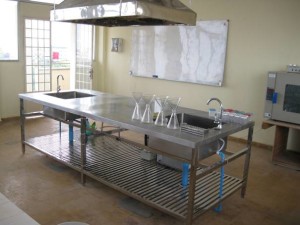
“Thanks to Dr. Paul Henriques and the generosity of the Auckland Unitarian Church, we received a donation of NZ$3400 to develop our Food Technology laboratory. The first step has been to replace the old brick and tile chemistry benches with a big stainless steel demonstration table with fume hood. Remaining funds will be used to buy some shelving, a deep freezer and microwave oven.”
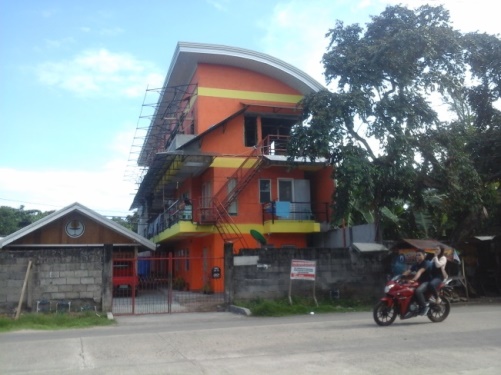
In August 2015, the Brisbane UU asked our church if we could provide urgent financial assistance to help completion of a schoolgirls’ dormitory at Dumaguette, in the Philippines. The PSJ group considered this project worthy of support, and in September 2015 the church sent a donation using PSJ funds. The dormitory is close to 5 Universities and colleges
Listen
or download the MP3
or download the PDF of this page.
Rev. Clay Nelson © 8 November 2015
I have to confess that like many of us I am left daunted by the scope of the problems being created by global climate change. Other than an occasional reference to the fact that there is a problem, I have never devoted an entire sermon to the eco-disaster we face. I can feel myself retreat into uncertainty about how to proceed even as I begin. What can I say that will make a difference? What can any of us do to save the planet? Continue reading What Would the Goddess Do?