A look at Rutger Bregman’s book, Humankind: A Hopeful History, with an in-depth look at a real life shipwreck incident, similar to Lord of the Flies but with a very different outcome. How might we look at humanity and ourselves differently, if we were aware that people in emergencies tend to be very generous and caring, rather than self-centered and panicky?
Speaker & Worship Leader:- Joel Hildebrandt
Follow this shortcut to the bottom of the page for the various readings, videos, etc. shared in the service.
Read below, or download the PDF
Joel Hildebrandt © 9 November 2025
I’m curious how many of us read Lord of the Flies in school? Raise your hand.
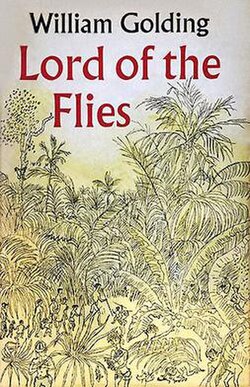
The book is evidently a popular one for school reading (both here and in the US). It was written by William Golding and published in 1954. Golding was strongly influenced by the Cold War and the ongoing threat of nuclear war; WWII, the bombings of London and Dresden, and the horrendous testing of atomic bombs on the people of Japan were recent events that must have weighed on his mind. Golding had read another book, The Coral Island, which focused on Christian messages and the supposedly civilizing effects of British colonialism. He decided he would write his own book, – and here I quote him – “a book about children on an island, children who behave in the way children really would behave”. (https://en.wikipedia.org/wiki/Lord_of_the_Flies) Interestingly, the original title of Golding’s book was Strangers from Within.
Given the circumstances under which it was written, Lord of the Flies is not a happy book. The boys, who are stranded on an island, start out with good intentions, electing a “chief” that they feel they can trust. He sets out 3 goals: to have fun, to survive, and to constantly maintain a smoke signal that could alert passing ships. But the boys grow lazy, neglect the fire and end up indulging in fantastical ideas about a “monster” that is loose on the island. Their fear takes over, and ultimately they end up fighting among themselves. One of the boys is killed, and a dangerous forest fire is set before they are rescued by a British naval officer. Prior to this, the children, having lost touch completely with civilized behavior, have begun painting their faces and engaging in “primitive” dances.
I’m sure all of us are grateful to the British navy for saving the day.
But I am here to offer an alternate version of events, a true story of boys stranded on an island, and a bit of context about the implications of the two stories.
4 years ago, a Dutch author by the name of Rutger Bregman published a book called Humankind: A Hopeful History.
As you may imagine, his outlook is somewhat different from Golding’s. Bregman’s book draws from the fields of history, economics, psychology, biology, anthropology, and archaeology to create a more positive and, in his view, a more realistic understanding of human nature. We are not by nature, he argues, selfish and mean. Irrespective of its literary virtues, Bregman says, Lord of the Flies is a work of fiction and should not be taken as representative of what people, including young people, really do in emergency situations.
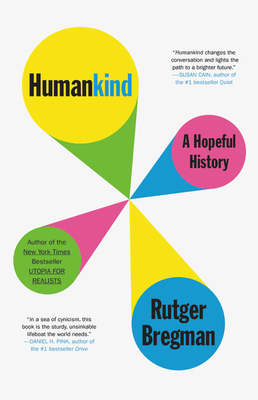
He offers us this counter-example, which he calls “The real Lord of the Flies”. In 1965, a group of 6 Tongan schoolboys ran away from their boarding school and “borrowed” a boat. Some of you may have heard the story, though it seems decidedly less well known than Lord of the Flies.
The 6 boys were aged 13 to 19. The 7m boat they went sailing in was wrecked by a storm, and their castaway story is pretty harrowing: they drifted for 8 days, bailing water out of the wrecked boat, over a distance of some 200 miles. At that point they sighted the little island of ‘Ata, southwest of Tonga, and left the boat behind, taking planks from the wreckage to help them stay afloat. They paddled 36 hours with their boards in order to reach the island. Now they were exhausted, dehydrated and, as you can imagine, starving. They set about immediately finding food in the form of seabirds nesting on the island, and their eggs, and fish from the sea. They were fortunate to find a long-abandoned village and made use of the remains of the dwellings. They saved rainwater and also found wild chickens, taro, bananas and coconuts.
So that is the basics of their story, but the rest is even more interesting – and so very different from The Lord of the Flies. The boys managed to start a fire – the old 2 sticks method . Over time, they created a garden and a sports area in the abandoned village. They set up their own system for resolving disputes. They kept the fire going throughout, unlike their fictional counterparts. They shared labour in pairs for 15 months: kitchen work, garden work, and guard duty.
They abandoned clothing (and haircuts) as impractical and unnecessary, and they sang songs to keep up their spirits; they even composed songs of their own.
After 15 months of living this way, the 6 boys were rescued not by the British navy but by an Aussie fishing boat. You can imagine the astonishment of the fishing boat’s captain on being greeted by naked boys with very long hair. They were returned safely home to incredulous gratitude among their families and their school; it was assumed that they had perished at sea. Physical examinations revealed all of them to be in good health – including one lad who had fallen and broken his leg, which the others had helped him set and tend. The leg was fully healed.
Huge celebrations were held. The boys had taken a boat that did not belong to them for their adventure, which had begun with a seemingly innocent caper playing hooky from their Anglican school on Tonga. The owner of the stolen boat forgave the debt when money was put up to pay for it. Decades later, Rutger Bregman interviewed both the captain of the rescuing fishing boat and one of the boys, now an older man, for his book Humankind: A Hopeful History. That boy and the captain remained friends throughout their lives. I love a happy ending, don’t you?
The story of the Tongan shipwrecked boys stands as an inspiring counter-example to the discouraging and fictional story that so many of us read in school; as evidence that in the real world, human beings are very much capable in crises of working together to survive, even to thrive. There are many other such examples in Bregman’s book.
Why does this matter? Lord of the Flies, although it is a work of fiction, left many of us with the impression was that it was a sort of parable; that what those boys did in Lord of the Flies was a warning to us all – because it was a realistic portrayal of what would really happen, in that kind of situation.
I believe the story carries a lot of cultural weight. Rutger Bregman, the author of Humankind, argues that again and again we are told stories like this that add to the social lexicon, the one that tells us how bad we are as a species. In a crisis, we will soon lose our civilized veneer, and it will be everyone for themselves, right? “People are no darn good,” my father used to say. And I think that, on some level, many of us believe that. Take Hurricane Katrina, for example. From the media reports, we might be under the impression that the people of New Orleans took advantage of the disaster to take advantage of each other. The true story, as Bregman reports, citing extensively, is quite to the contrary – once again, people came together in countless and creative ways, to help each other survive the crisis. But people helping each other doesn’t seem to sell as many newspapers. And it doesn’t fit the prevailing notion that we need powerful leaders and an obedient populace to keep order.
Rutger Bregman calls this the “nocebo” effect. We all know what a placebo is – a fake pill. If you expect to get better, because you are told that you will, there is a surprisingly high chance that you will, in fact, get better – even if the pill is fake. So what happens when we are told repeatedly that, given a crisis or an emergency, people will panic and turn on each other? If we hear it so much that we believe it, that’s the nocebo effect.
Returning for a moment to WWII, the German military leaders were convinced that their devastating bombing of London would send the English into a state of panic, making their attempt to take over the UK an easy task. Bregman finds that the opposite happened: the people of London kept their cool and went out of their way to help each other, utterly failing to fulfill the German hopes.
So of course, when it was England’s turn to bomb Dresden, they had learned how useless such a bombing campaign is, right? No, in fact, they did very much the same thing that the Germans had done, with very similar results. It seems to be embedded in our collective psyche: in a crisis, people will panic, the social order will break down, civilization will crumble. It’s hard for us to believe that is not going to happen, even when it doesn’t happen. If you should chance to read Bregman’s book, he gives many more examples of this.
What could happen if we believed, as a whole, that people in general are more likely to help each other out than to turn on each other? How might our ideas of what is possible be informed by that?
And also, What about all the horrible things that people do? What about Donald Trump, Vladimir Putin, Benyamin Netanyahu… and all the people that support them? There is slavery, genocide, child abuse…the horrible list goes on.
I’m going to kick the can down the road here, saying only that Bregman does raise this question and attempt to answer it. For me, I think it needs better addressing – but this is a pretty big topic, and needs a full talk of its own. Perhaps it can be addressed at a future time.
As Unitarians, we value “The inherent worth and dignity of every person.” I think that a resource that shows that, in general in large and small groups we are capable of solidarity, kindness, clear thinking and mutual aid could be a worthwhile one, in our “free and responsible search for truth and meaning”. If some of us choose to delve deeper into Rutger Bregman’s book, Humankind: a Hopeful History, perhaps it might help to inform some of our future musings and discussions.
Meditation / Conversation starter
- What experience do you have with the kindness and generosity of strangers?
Links
Opening Words:- are from “We Lay Down Our Burdens” by Kate Steinberg
Reading:- “Hopefulness in Bad Times” from “You Can’t Be Neutral on a Moving Train” by Howard Zinn
Closing Words:- “In the Rising Sun Today” by Joel Miller