So much can be achieved if we share honestly and listen deeply to each other. But what if we do so and find that our beliefs, needs or values are fundamentally at odds?
Listening into the Difficult PlacesListen, or download the MP3
I’ve spent my entire adult life believing in the power of communication.
I have a PhD in the subject. I’ve spent my career studying it, teaching it, writing about it, and trying — not always successfully — to practise it effectively.
Next week, when classes begin at the uni, my main teaching responsibility will be a course entitled Managing Conflict.
So I am personally and professionally invested in the idea that clear and honest sharing and deep listening matter.
Speaker:- Dr. Tof Eklund Worship Leader:- Rachel Mackintosh
If you find nonbinary gender(s) confusing, want to understand what it means to be nonbinary, or are nonbinary, this one’s for you. Dr. Tof Eklund (they/them) speaks about being nonbinary, the challenges and prejudices nonbinary folks face, and the profound implications of nonbinary thought and spirituality.
Kia ora koutou katoa. I am going to read a personal reflection on this month’s Pride theme, and then I’ll introduce our guest speaker, Dr Tof Eklund.
I thought I’d talk about flags.
I had intended to open the Pride month services with brief explanation of the rainbow flags we’ve been displaying, but I didn’t manage to get around to it. Then, with the occasion of Tof speaking today, I wondered if there was a non-binary flag – and there is, so I’ll talk about that soon, but this gives me an opportunity to also talk about the rainbow flag in general.
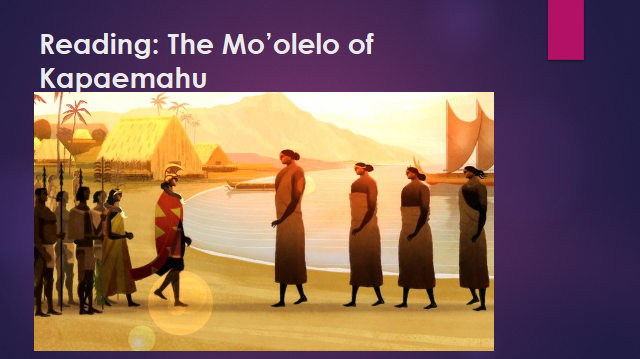
Instead of preaching about queer folks as people who need support, I’m inverting it to what can queer and trans people teach the rest of us about being fully human? Especially now, when authoritarianism and even AI are trying to flatten us all into simple categories. I’ll be weaving in the story of the Kapaemahu stones in Waikiki – four healing stones connected to mahu (Hawaiian gender-diverse) practitioners that were literally buried under concrete for decades and then uncovered in the 90s.
The Stones That TestifyListen, or download the MP3
Today’s service marks the first day of Auckland Pride month for 2026. I talked at some length during last year’s Pride service about the politics of Pride, and while I will not repeat that message here, I will touch upon the wider social context in which the queer community of Aotearoa finds itself at present. Last year it was clear that a reactionary political backlash was coming, and that has materialised in the last few months in the form of the coalition government’s attempt to curtail healthcare for trans youth. We don’t know yet what the result of this will be as the decision is currently undergoing judicial review. However, I think there are reasons to be hopeful about the resilience of Aotearoa’s queer community. Organisations advocating for access to reproductive healthcare such as contraception and abortion, have recognised that this assault on trans rights sets a dangerous precedent for bodily autonomy more broadly, and are being vocal in their opposition to the government’s agenda here.
Why do we repeat this ritual every year? It isn’t just to brag about our travels. When we share our water in the common bowl, it reminds us that while we are separate people, we are also part of an interdependent community.
You probably know about the water cycle.
We are in the middle of this cycle. When we drink about two litres of water every day, and then sweat or urinate, or die, we take and then put water back into the water cycle. So water is constantly on the move.
Even if you didn’t study chemistry, you might well know that water is a molecule made up of two hydrogen atoms and one oxygen atom. This molecule being tiny, if you had 18 grams of water, or a little more than half an ounce, that would be about 6 x 10^23 molecules.
This would be 602 sextillion molecules. If you were a 10 year old child weighing 35 kilograms you would contain 20 litres of water or 20,000 grams or 602 septillion molecules. That child returns ten percent or two litres to the water cycle every day.
Because water is constantly cycling around, and because every human being has such large numbers of molecules of water cycling through them, there’s a very good chance that each one of us has at least a few molecules of water that were formerly in the bodies of Socrates, Sappho, Jesus, Mohammed and the Buddha, and any number of great and wise people who lived in the past as well as some of history’s villains.
Thus when we say that we are all interconnected, that statement is quite literally true — we are all interconnected through the water cycle, not only with each other, but with all living beings past and present. Mary Magdalene, Kupe, Mary Wollstonecraft, Te Puea, Billie Holiday, your grandmother, my grandmother, our first minister, William Jellie all might literally be connected to you through water.
I now invite you each to bring your water — and if you didn’t bring it, please feel free to use the virtual and also real water here in this pitcher, that can stand in for the water you are connected to. Those at home, if you have water, pour it; and we will also pour water for you here.
Feeling a bit Grinchy this year? You’re not alone. This sermon is for everyone who has ever wanted to skip Christmas, escape the forced cheer, or hide from a holiday that asks too much. It’s also about what happens when love finds us anyway, in forms we didn’t expect, and in places we didn’t think to look.
The Grinch and Scrooge are my favorite Christmas characters. Not in spite of their cynicism, but because of it. They’re the only honest ones in their stories. Everyone else is performing joy, pretending Christmas magic just happens naturally. But the Grinch and Scrooge?
They’ve done the math. They’ve weighed Christmas against their pain and built excellent walls to protect themselves from a holiday that demands vulnerability they can’t afford.
And here’s what I love most: they’re not wrong. They’re not villains. They’re survivors. And they do what survivors do.
Speaker:- Marieke Jasperse Worship Leader:- Maria Hayward
Dr Jasperse is a consultant cross-cultural psychologist, and survivor of modern slavery, dedicated to destigmatising distress and strengthening responses that restore dignity and determination. She has consulted for the United Nations, the NZ and Australian governments, and anti-trafficking NGOs, and looks forward to sharing her personal and professional insights on trafficking in Aotearoa New Zealand.
Saunoama’ali Dr Karanina Sumeo is the immediate past Equal Employment Opportunities Commissioner and will speak about her experience leading the Pacific Pay Gap Enquiry.
Pacific Pay Gap Enquiry and Human RightsListen, or download the MP3
Speaker:- Margaret Lewis Worship Leader:- Shirin Caldwell
Merge Café – Making a community-minded third spaceListen, or download the MP3
A third space is neither home, school nor work but a space where people can be themselves, be with friends. A café, a bar, a museum, even a park. may be places where many of our most vulnerable communities do not feel welcome or feel they need to be out of sight. Similar to a church, Merge Community and Café is a space where all communities are welcome. Find out our Kaupapa, how it works and some of the impacts. Meet Margaret Lewis from Lifewise/Merge whose role is to help build capability and capacity within the many communities Merge works with. Also see below for how you could contribute.
The management committee has approved a new project with two parts:
Providing $25 meal cards for local people experiencing homelessness Each card provides 5 free lunches. We are inviting the congregation to contribute towards the cost of these cards, with the PSJ offering matched funding of up to $250. If you would like to contribute towards a meal card, please make your payment to the Auckland Unitarian Congregation Incorporated account: 02-0200-0156552-00, Particulars: Your Name Reference: Merge Café
Collecting food items for Merge Café We are seeking donations of food items that can be used in the café, such as flour, oil, pasta, rice, lentils, tinned food, and any surplus fruit or vegetables you may have. Other suitable food items will be used to create small food parcels for their clients. Please place items in the plastic box on the left as you enter the church.