Neurodivergence. What does it mean – what are the challenges faced, and how can neurotypical individuals assist in mitigating these challenges and ensuring neurodivergent people are included, respected and accommodated?
Speakers:- Nikki Smith-Eklund (she/they) M Hum Rts & Dr. Tof Eklund (they/them) Worship Leader:- Rachel Mackintosh
Navigating Neurodivergence and the Neurodiversity Paradigm
20 November is International Day of Remembrance of all those in the transgender community murdered in hate crimes in the previous 12 months. The transgender community have become the target of disinformation and vilification by politicians and the far-right. Perhaps it is time for the rest of us to stand up to transphobia.
Speaker & Worship Leader:- Maria Hayward
Transgender Day of RemembranceListen, or Download the MP3
A couple of years ago, on Nov 20th, my daughter asked me if I wanted to go with her to a special service at St Matthew-in-the-city for “Transgender Day of Remembrance”. We sat nervously, in the candlelit church, and read, in somewhat shock and distress really, as hundreds of names scrolled in a datashow list in front of us. These were the names of 370 transgender persons – almost all women – who had been murdered in the previous 12 months because of their gender identity.
And they were only the names of people from countries willing to report these hate killings, and only of those who were identified as trans at their murder.
I imagine there were many, many hundreds more – not counted.
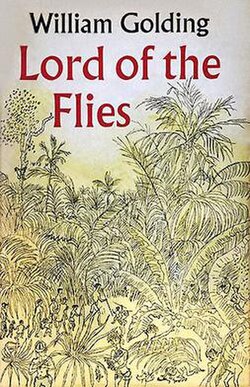
A look at Rutger Bregman’s book, Humankind: A Hopeful History, with an in-depth look at a real life shipwreck incident, similar to Lord of the Flies but with a very different outcome. How might we look at humanity and ourselves differently, if we were aware that people in emergencies tend to be very generous and caring, rather than self-centered and panicky?
Speaker & Worship Leader:- Joel Hildebrandt
The Real Lord of the FliesListen, or download the MP3
I’m curious how many of us read Lord of the Flies in school? Raise your hand.
The book is evidently a popular one for school reading (both here and in the US). It was written by William Golding and published in 1954. Golding was strongly influenced by the Cold War and the ongoing threat of nuclear war; WWII, the bombings of London and Dresden, and the horrendous testing of atomic bombs on the people of Japan were recent events that must have weighed on his mind. Golding had read another book, The Coral Island, which focused on Christian messages and the supposedly civilizing effects of British colonialism. He decided he would write his own book, – and here I quote him – “a book about children on an island, children who behave in the way children really would behave”. (https://en.wikipedia.org/wiki/Lord_of_the_Flies) Interestingly, the original title of Golding’s book was Strangers from Within.
On 21 February 2023 Archimedes’ arrow of time is released, to speed over 254 days to its destination: death.
On 21 February we receive news of Clay’s terminal diagnosis and driving home from the hospital appointment I begin sobbing. This is not a problem for my driving, actually, but Clay suggests I pull over. Which I do into the side of a car minding its own business in the next lane. The kindness of the stranger in that car, who is not angry but concerned, sets the tone of the next 254 days.
According to Bishop Ussher’s treatise published in 1650, the universe began precisely on October 23, 4004 BC—at sunset. Science disagrees, — by about 13.8 billion years. This service explores how embracing scientific understanding can deepen, not diminish, our sense of awe, wonder, and the sacred.
The 23rd of October, Thursday this week, was a big one for at least two reasons. One was the mega strike of workers across many careers and across New Zealand. The second was that Thursday marked the beginning of the 6029th year since the creation of the world, according to Bishop James Ussher. He published his scientific treatise to that effect in 1650: October 22, 4004 BC, in the evening, say 6:00 pm, is when the universe was created; thus 23 October, 4004 BC was the first day.
There was some controversy about this date in Ussher’s time. Other scholars, including Isaac Newton, came up with dates ranging around 4000 BC; counts of attempted chronologies in 1861 suggested there were up to 300 different opinions of the Earth’s age, as trying to figure it out was not unusual among scholars of the time.
Today I’m going to talk about the history of the Earth and how we think about time. These have implications for the choices we make, in particular around science.
This joyful service celebrates the life of our congregation and is our annual memorial to the life of its creator, Rev. Dr. Norbert Čapek. As minister to Unitarians in Prague, Czechoslovakia, he was a 20th century Unitarian martyr, killed by Nazis in 1942.
The British Unitarian Assn describes the Flower Communion as “a celebration of the good things of life as given and received through the fellowship of a congregation, symbolised in the giving and receiving of flowers.” The Flower Communion has become an Auckland Unitarian annual ritual to celebrate the coming of Spring, one of the best things in life, IMO. It also commemorates the minister who created the Flower Communion. You’ll hear more about Rev Čapek later.
This year, Mental Health Awareness Week (MHAW) has been aligned with the UN World Mental Health Day, which was last Friday, 10 Oct. The week of events ended last Friday, but community events are still going on.
As someone who has a mental disorder and used mental health services, I was an advisor to Auckland DHB mental health services. So I reckon I’m qualified to speak on mental health awareness.
Suffrage was a victory for women, but it also expanded the soul of our democracy. As men offer this service, we do so as allies — affirming that women’s rights, and the rights of all people, remain a sacred responsibility we carry forward together.
The service opens with a whakatauki (proverb) and introduction to the theme. The readings are a personal story and an outsider’s perspective of Te Ao Māori in Aotearoa, reminding us of our unique and special home. The talk will cover the basics of pronunciation and key words that may have meaning for members. 3 waiata will be sung. The discussion will comprise a mini te reo lesson in small groups.
I’d like to begin with a whakatauki. This proverb, which talks of searching, listening, working and striving together, with love and compassion, so that we can reach our goal – seems to fit with the shared effort that is required to sustain and grow Te Reo in Aotearoa.
Ma te titiro, ma te whakarongo, ma te mahitahi, ma te manawanui, ma te aroha. Ka taea e au.
The theme for Māori language week this year is: Ake ake ake – keep going, sustain the language. Last week while I was researching for today’s korero, I found a photo online that triggered a strong emotion in me because of a personal connection. I share this with you as a way of illustrating how easily we, as pakeha can dismiss or not concern ourselves about the effects of colonisation and institutional racism. We know it’s wrong – but we don’t always feel it. It has never affected us. But sometimes it does. An event or a situation does come close to home.