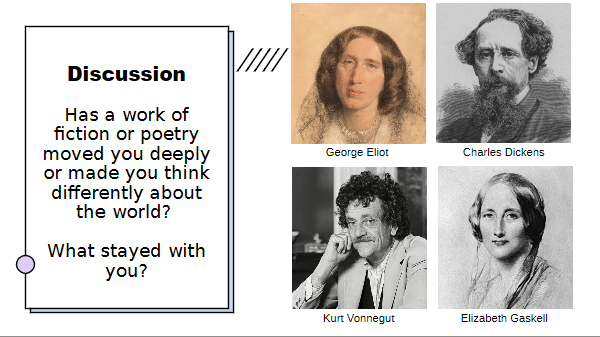
Can a novel help us imagine—and create—a better world? In this service, guest speaker Peter Lineham explores well-known writers whose lives and work were shaped by Unitarian beliefs and communities. Focusing on Victorian and later novelists, he considers how freedom of thought, compassion and a sense of calling found expression in their writing—and what their stories might offer us today.
Imagining a Better World: Writers and the Unitarian SpiritImagining a Better World: Writers and the Unitarian Spirit – Full Episode Listen, or download the MP3Imagining a Better World: Writers and the Unitarian Spirit – Full Episode Listen, or download the MP3
Our speaker today, Professor Peter Lineham, is a New Zealand historian specialising in religious history.
He is the author of many books on New Zealand religious history. He has undertaken research on, among other things, new religious movements, and the histories of the Brethren, Protestantism, evangelicalism, and Anglicanism in New Zealand.
In 2019, Peter was appointed a Member of the New Zealand Order of Merit, for services to religious history and the community.
It’s lovely to have him here to talk to us on something more joyful than getting rid of pets, and I know you will enjoy and benefit from hearing him today.
Jazz is Life — What Music MeansJazz is Life — What Music Means – Full Episode Listen, or download the MP3Jazz is Life — What Music Means – Talk Only Listen, or download the MP3
Music matters spiritually because it can interrupt us, open us, and connect us—to our own inner lives, to other people, and to something larger than ourselves.
When Music Takes Our Breath Away: The Sounds of ReverenceWhen Music Takes Our Breath Away: The Sounds of Reverence – Full EpisodeWhen Music Takes Our Breath Away: The Sounds of Reverence – Talk Only
Each Sunday including this one we take the opportunity to share our joys and concerns. For me, this talk is an extended joy. I’m no expert on music. I am not here to lecture you on the technicalities of music because I don’t really understand them myself. Instead I want to share the joys that music brings to me and try to explain why that is, and the role that it plays in my spiritual life. My hope is that some of it will resonate with you and that it provides an opportunity for you to reflect on music in your life and share some of the joy I feel.
After a month of daily cold-water swimming and meditation, Kate will reflect on the physical, emotional, and spiritual effects of these disciplines. Understanding the science behind the practices does not reduce them to dry and rational explanations but adds to our experience of awe and wonder.
A vibrant, Auckland-based a cappella choir with a gospel heart and a rock ‘n’ roll soul (so says their website). Founded in 2000, this 30+ strong ensemble brings together people from all walks of life—It was founded 26 years ago by Jean McAllister and the late NZ blues legend Rick Bryant and a number of others who are still in the choir. They love their rehearsal space – our Unitarian Church – where they rehearse weekly. A very warm welcome to Jubilation Acapella Gospel choir.
Meditation / Conversation starter
What is the first song you remember singing as a child?
Were you ever in a choir?
How did it make you feel when you all sang together?
Exploring music as a development of pulse, breath and vocalisation, and also as a way of building culture through repetition, borrowing and repurposing.
Music and Being Human / the beat and the borrowings / the song we becomeMusic and Being Human / the beat and the borrowings / the song we become Listen, or download the MP3 – Full EpisodeMusic and Being Human / the beat and the borrowings / the song we become Listen, or download the MP3 – Talk Only
I invite you to begin with something so ordinary that we rarely notice it.
Take a breath.
Feel your heart.
Before we learn language, before we develop beliefs, before we choose identities or communities, we live inside rhythm. The pulse in the womb and the rise and fall of our lungs are among the first music we ever know.
If you look at the kinds of things we say about ourselves in this Unitarian faith, you will often find reference to the fact that we don’t offer easy answers, or certainty, or the promise that an interventionist god will look after us.
There is a quote from Rainer Maria Rilke that elegantly sets out this aspect of Unitarianism:
“Be patient towards all that is unsolved in your heart and try to love the questions themselves, like locked rooms and like books that are now written in a very foreign tongue. Do not now seek the answers, which cannot be given you because you would not be able to live them. And the point is, to live everything. Live the questions now. Perhaps you will then gradually, without noticing it, live along some distant day into the answer.”
Today our topic is art and the ineffable.
By some irony, I will be using words to convey the ineffable: that which is too vast to be contained in words.